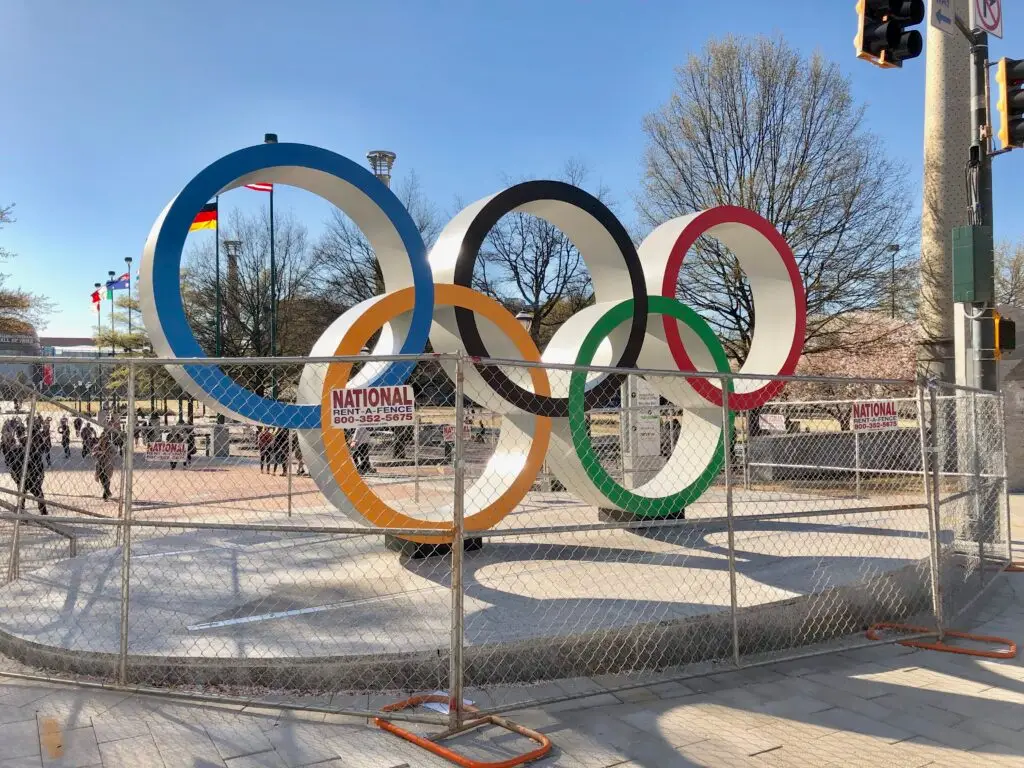
Every four years, Americans pause their divisions and rally around something bigger than politics. We gather as one unified nation to watch athletes walk into a stadium draped in red, white, and blue. We cheer when the Stars and Stripes rise above the podium. We teach our children that wearing “USA” across your chest is an honor. And yet, in recent Olympic cycles, we’ve witnessed a recurring phenomenon: athletes competing under the American flag publicly disparaging the very country they represent — sometimes from the Olympic stage itself. From our perspective, this conversation is not about silencing speech. It is about exposing a growing cultural double standard, one that celebrates certain forms of dissent while stigmatizing expressions of patriotic pride. A Growing Pattern Over the past several years, a number of Team USA athletes have used Olympic-related moments to criticize America in sweeping terms. Gwen Berry turned away from the American flag during the national anthem at the 2021 U.S. Olympic Trials medal ceremony, later describing the anthem as “disrespectful.” Members of the U.S. Women’s National Team, including Megan Rapinoe, have knelt during the anthem and repeatedly characterized America as structurally oppressive while competing internationally. To navigate Rule 50, which prohibits any form of “demonstration, political, religious, or racial propaganda in any Olympic sites, venues, or other areas,” some athletes have shifted their commentary to sanctioned press conferences or media interviews. For example, Winter Olympic freestyle skier Hunter Hess used post-event media appearances to characterize the United States as fundamentally unjust, even while benefiting from the constitutional freedoms, institutional support, and economic opportunities that uniquely enable American athletes to compete on the global stage. To be clear: these athletes have the constitutional right to speak their mind. The First Amendment protects their speech. That is not in dispute, but rights do not eliminate responsibilities and positive representation carries weight. The Question Few Will Ask Here is the tension that mainstream institutions rarely address: Why is criticism of America on the world stage frequently praised as ‘brave’ while unapologetic expressions of national pride are often labeled extreme, exclusionary, or dangerous? That asymmetry is not tolerance — it is selective validation. In today’s environment: Public denunciations of America are framed as ‘moral courage.’ Open celebration of American exceptionalism is treated with suspicion. Sponsors and governing bodies remain largely silent when athletes disparage the nation. Meanwhile, overtly patriotic speech is often scrutinized or marginalized. If tolerance is the standard, it must apply across the board! The Olympic Platform Is Not A Personal Stage The Olympic Games are not merely a collection of individual performances, rather they are structured around national representation. Athletes march behind their country’s flag, they wear uniforms bearing their nation’s name and they stand beneath that flag during medal ceremonies. This symbolism is not accidental — it is foundational to the Games. Competing in the Olympics is an extraordinary personal achievement, but it is also an act of civic representation. The uniform is not a personal brand extension, the winners podium is not a campaign rally, and the American flag is not a prop. Representation does not require blind allegiance and it does not demand silence about policy disagreements, however, it does invite a measure of humility and respect for the millions of Americans whose identity is bound up in those symbols. America is the country that: Protects the right to dissent without imprisonment. Provides the economic and sponsorship ecosystem that makes elite sports possible. Guarantees the freedoms that allow athletes to criticize it in the first place. There is a profound irony in condemning America from a platform made possible by its constitutional protections. The Cultural Incentive Structure Why does this pattern persist? Because there is little to no institutional cost. When anti-American rhetoric is expressed in or around the Olympics: Media outlets always amplify and defend it. Corporate sponsors continue their support without constraint or withdrawal. Cultural institutions applaud the behavior and describe it as necessary social commentary. But just imagine the reverse. Imagine an athlete unapologetically praising America’s founding ideals without qualification. Imagine a competitor using the podium to celebrate American exceptionalism or criticize radical progressive orthodoxy. Would that athlete be met with equal celebration? Or would investigations, sponsorship pressure, and reputational backlash quickly follow? We do not seek to punish dissent, rather we simply seek consistency. If protest is noble, it must be noble across viewpoints. If patriotism is suspect, then anti-patriotism must also face scrutiny. If tolerance is real, it must extend in every direction. Unity Is Not Oppression The Olympics remain one of the last shared civic rituals in American life. For a brief moment, politically partisan divisions recede. Americans who disagree on policy, culture, and ideology still unite in support of their country’s athletes. The American flag is not a partisan emblem. The national anthem is not a political slogan. The Olympic uniform is not an ideological statement. Criticism of public policy is a healthy part of democracy. But contempt for the nation itself, broadcast globally while standing under its banner, undermines the civic cohesion that pluralism depends upon. We believe in accountability, fairness, and equal standards. When institutions amplify narratives that erode national unity while marginalizing those who affirm it — that is not neutrality — it is cultural engineering. A Moment Of Reflection Before The Torch Goes Out The Olympic Games are meant to inspire excellence, unity, and national pride. They are one of the few world stages where Americans, of every background, stand together and cheer for the same flag. That unity is unbelievably fragile these days. Athletes who earn the privilege of representing the United States of America are not required to abandon their convictions. These gifted professional athletes should recognize the gravity of the uniform they wear and the flag that rises behind them. Proud representation of our nation is not just personal achievement, but it is national symbolism as well. As the Olympic closing ceremonies approach this Sunday, there is still time for reflection. There is