Author name: Chad Banghart

News

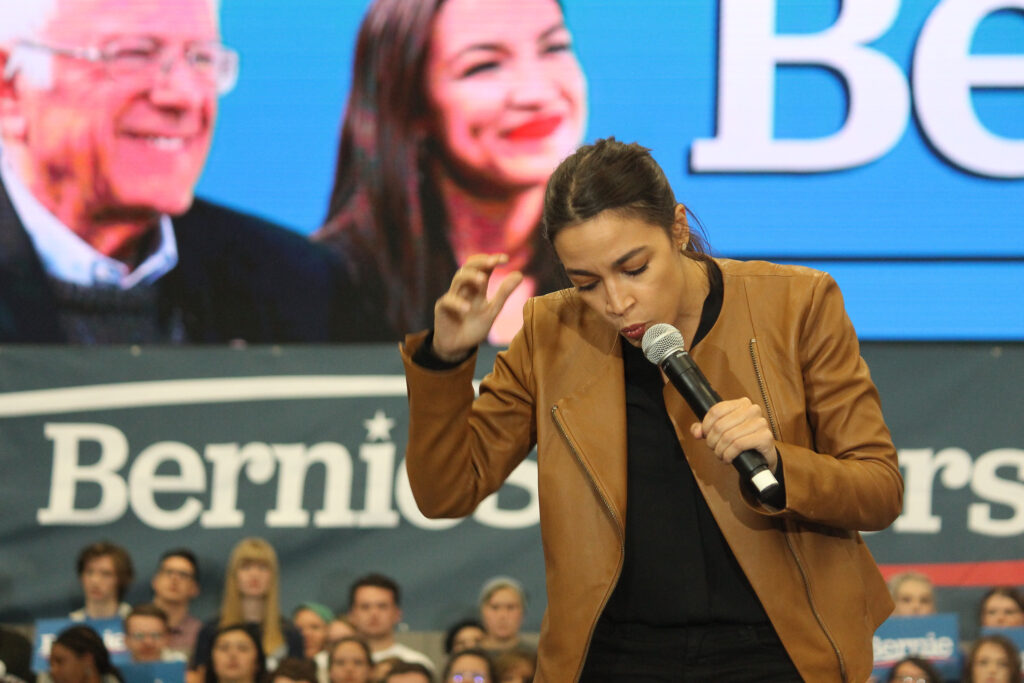
Ocasio-Cortez hit with new ethics complaint over boyfriend’s email account

EXCLUSIVE — A conservative group that filed a complaint with the FEC alleging Rep. Alexandria Ocasio-Cortez’s campaign may have illegally funneled thousands of dollars through an allied PAC to boyfriend Riley Roberts on Thursday lodged a fresh complaint with the Office of Congressional Ethics. The new filing also concerns the famous congresswoman’s boyfriend, but focuses on his use of a congressional email account. The Coolidge Reagan Foundation, a political nonprofit, alleges in the complaint that the New York Democratic lawmaker used her newly found congressional privileges in an unethical manner when she set up the House email address for Roberts. “This Complaint alleges Representative Alexandria Ocasio-Cortez improperly converted U.S. House resources to her non-official, personal use by obtaining an official ‘@mail.house.gov’ e-mail address for her boyfriend, despite the fact he was not employed by her congressional office,” reads a line from the complaint obtained by Fox News. “Moreover, it appears she obtained the e-mail address for him by falsely designating him a ‘staff’ member.” Attorneys for the foundation allege that Ocasio-Cortez violated restrictions on personal use of House services and equipment—as outlined in the House Ethics Manual. They maintain that the provision of an official House-based email address for Roberts is a violation of rules that prevent outside individuals from having an official account. “To my surprise, no one else had acted on this information,” foundation attorney Dan Backer told Fox News, “and while media coverage of misconduct is good, [Alexandria Ocasio-Cortez] has to be held accountable.” “On this matter, only OCE [Office of Congressional Ethics] has the investigative authority to do so.” Officials for Ocasio-Cortez’s office did not immediately respond to requests for comment, but the congresswoman made public statements last month when news of Roberts’ email account surfaced saying the account was given so he could have access to her calendar. “Congressional spouses get Gcal access all the time. Next time check your facts before you tweet nonsense,” she tweeted. Asked about the arrangement last month, David O’Boyle, the spokesperson for the Office of the Chief Administrative Officer, told Fox News: “From time to time, at the request of members, spouses and partners are provided House email accounts for the purposes of viewing the member’s calendar.” But Jason Chaffetz, former GOP chairman of the House Oversight Committee, said Ocasio-Cortez’ claims don’t stack up. Click here to read the full news story.

OP-EDs

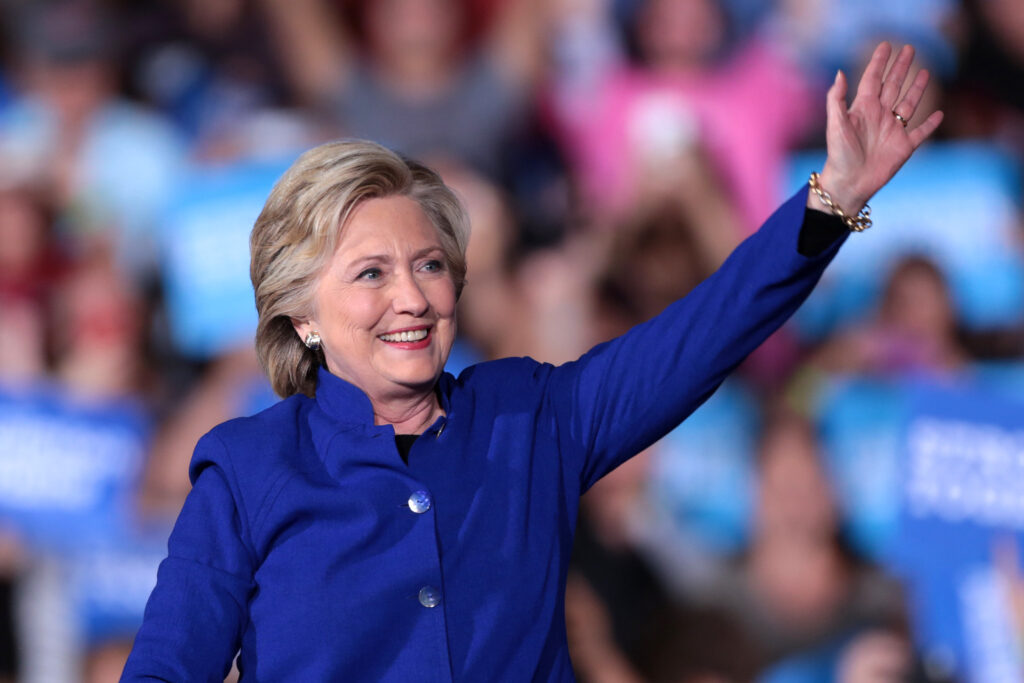
If Hillary And Democrats Laundered $84 Million In 2016, They Should Face Justice

Hillary Clinton’s days of political relevance may be behind her, but her scandals are not. While Clinton’s years at the State Department were marred by scandal after scandal, they pale in comparison to her time running for higher office. In 2016, the Democratic presidential candidate may have presided over the largest campaign finance scandal in U.S. history. A lawsuit based on federal records alleges the Clinton machine laundered $84 million in excessive six-figure contributions through the Hillary Victory Fund, to dozens of Democratic state parties, on to the Democratic National Committee (DNC), and ultimately to Clinton’s campaign. Democrats and their media allies downplay the accusation as some partisan ploy, claiming the accusers are “fishing for publicity.” They chalk it up to a Donald Trump supporter’s anti-Clinton bias. That’s when Democrats mention it at all, otherwise staying stunningly silent in the face of growing information that boggles the mind. Yes, I’m a Trump supporter, but dodging the question doesn’t make it go away: Did Hillary Clinton, dozens of Democratic Party officials, and hundreds of liberal mega-donors break the law? The evidence—built entirely from Democrats’ own Federal Election Commission (FEC) reporters and public statements—clearly points to “yes.” The lawsuit is likely to result in many more public documents being aired about what really went on behind the scenes in 2016, which is already giving rise to negative news coverage. In recent weeks, news stories from around the country have implicated Democratic state parties in Delaware, Kansas, Maine, Nevada, and other states for their part in papering over excessive donations from mega-donors like fashion icon Calvin Klein and “Family Guy” creator Seth MacFarlane to the Clinton campaign. Reports say the Virginia Democratic Party, for example, was used to funnel nearly $2.4 million from the Hillary Victory Fund to the DNC during the 2016 election, retaining not a single penny from six-figure contributors who almost certainly understood how their money would flow. The Nevada Democratic Party is on the hook for roughly $1.6 million. Kansas Democrats, meanwhile, “can’t account for $900,000” in excessive funds. Clinton’s campaign finance violations came to light last December, when the Committee to Defend the President filed a complaint with the FEC, documenting “an unprecedented, massive, nationwide multi-million dollar conspiracy.” The 101-page complaint is based entirely on FEC reports filed by Democrats, memos authored by Clinton campaign manager Robbie Mook, and public statements from former DNC chairwoman Donna Brazile and others. After the FEC refused to act on the complaint within a statutory 120-day timeframe, the committee sued the FEC to force action, claiming its failure to act is “arbitrary, capricious, contrary to law, and an abuse of discretion.” On Friday, the FEC made its first court filing. Tellingly, the agency didn’t challenge the committee’s legal arguments, or claim to be engaged in a diligent inquiry. Instead, the FEC filed a procedural “motion to dismiss,” arguing the law should be ignored so they can prevent outside groups from filing lawsuits to shield complicit Democrats. Democratic FEC Commissioner Ellen Weintraub called for just such a suit when it involved a Republican. Don’t expect the pro-Clinton mainstream media to give this the coverage and investigative reporting it deserves, or call for the same accountability they have when liberal groups target Republicans. After all, the overwhelming majority of the scandal’s news coverage has come from Fox News and other conservative outlets, and from in-state newspapers tracing the money trail through local Democratic operations. The New York Times remains silent, refusing to cover the story. So do CNN and MSNBC. Where is their outrage? Last month, the liberal media predictably pilloried President Trump’s pardon of Dinesh D’Souza, who was prosecuted, convicted, and served eight months in a community confinement center and five years of probation for a similar campaign finance violation totaling $20,000 in straw man contributions. The Clinton machine stands accused of steering $84 million in straw man contributions to Hillary’s campaign—more than 4,000 times more! Democrats and their media allies should hold their own accountable, like they would any Republican. If I’m wrong, then I urge Democrats to present evidence to the contrary, starting with their reply to December’s FEC complaint, which they have refused to make public. National media also needs to drop the double standard and cover the story. Until the full truth comes out, Hillary Clinton and her enablers have plenty of reasons to be nervous—84 million of them. Dan Backer is a veteran political campaign counsel who serves as of-counsel for Chalmers & Adams, a political law and litigation firm. Editors Note: This op-ed was originally published in the The Federalist. You can read this op-ed and explore their other news content by clicking here.

OP-EDs

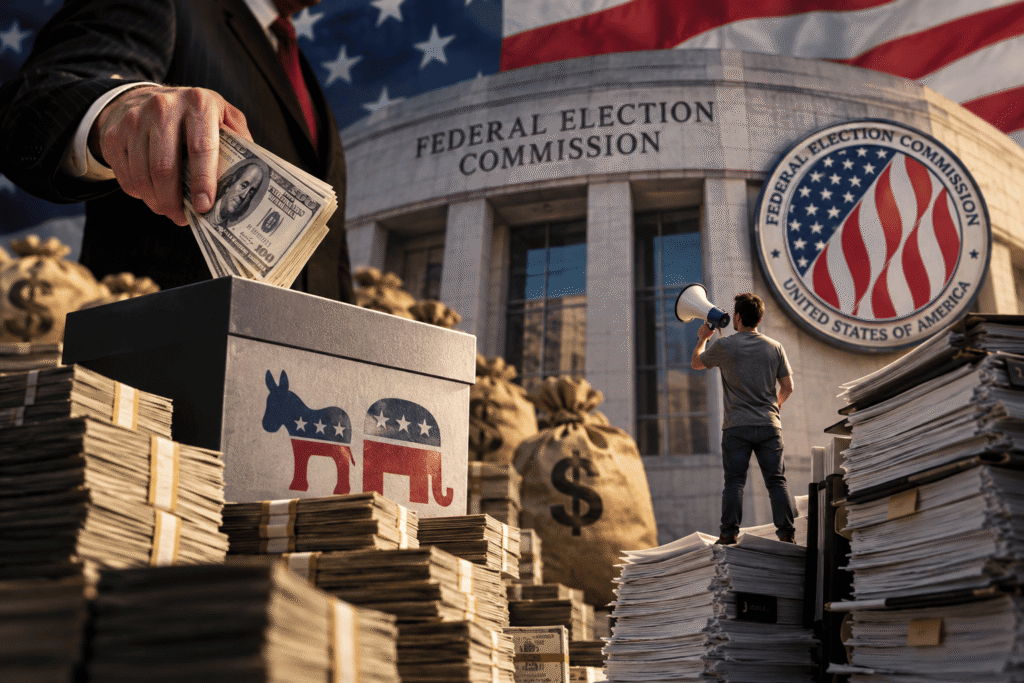
Why Campaign Finance Rules Make Free Speech Expensive For The Little Guy

The great thing about free speech is that it is, in fact, free. You don’t have to spend a single penny to speak your mind—just ask the local street-corner preacher or campus protester. Being heard is what costs money, and in the robust marketplace for political speech, it takes a whole lot of money to spread a convincing message that influences our politics. Conveying political ideas, whether for or against an issue or candidate, requires a compelling, persuasive message effectively delivered multiple times to the right audience. Most of us, even if we have good ideas, aren’t always effective at delivering the most persuasive version of our vision. If your goal is persuading others to support your views (and effective political speech often requires persuading a great many people), it helps to have on your side professionals who know how to craft political communications. Their job is to help you deliver the most persuasive message so you can be effective in building a movement to win the argument. It takes money to create those persuasive messages, particularly when that message must be delivered in multiple ways over time without losing its potency. Persuasive political communication that actually and consistently cuts through the noise of today’s political environment is uncommon. If you’re good at it, you’re pretty rare. With so many willing to pay for their message to be heard, the better the communicator, the greater the premium. Reaching Lots of People Costs Lots of Money Of course, no matter how persuasive a message is, if no one hears it, you’re only convincing yourself. Some might encourage confining your advocacy to random Facebook posts, as if adherents come to ideas like flies to honey. That sort of nonsense keeps good ideas unheard. You must keep your supporters engaged and interact with new supporters to build a movement. Whatever mechanism you use to engage—TV, radio, print, billboards, phones, mail, emails, websites, Facebook posts, tweets—at any real scale comes at a cost. For example, let’s say you wanted to communicate to a relatively modest 100,000 people. How would you? Email costs from $0.25 to $2.00 per thousand sent; a $1 average (one-tenth of a penny per email) is $100 to send a single message. Sending just once a week costs $5,200 per year. Keep The Promise Pac, a pro-Ted Cruz super PAC, spent $110,000 in spring 2016. Facebook likes can cost $0.05 to $0.10 each, and $0.50 or more per click to a website. The Republican National Committee paid Facebook more than $340,000 in March 2016 alone for “Advertising.” Robocalls average $0.03 per minute, so a one-minute call would cost $3,000. Rep. John Shimkus spent $29,000 this spring on robocalls. Live calls cost roughly $2 per phone call. Sen. Rand Paul spent more than $20,000 on live calls to voters in July 2015. Direct mail can range from $0.50 to $2.00 per piece. That’s at least $50,000 to send a single mailer. In the first half of this year, Priorities USA Action spent $1,420,704 on direct mail alone. Radio and TV costs can be stratospheric, and it’s exceedingly hard to measure their success. Pro-Jeb! super PAC Right To Rise spent nearly $100 million on its ultimately unsuccessful national media campaign. All this communication only comes after slowly building, expensively buying, or more commonly renting access to enough leads to produce those 100,000 contacts. Simply communicating to people once isn’t enough, and you will keep paying the cost of first contact every time unless those you reach opt-in to your message. Finding low-cost solutions to this problem is vital. While the finest of political insiders often deride petitions, for example, they serve the basic function of exposing recipients to a message they may agree with, letting them choose to engage and reducing the cost of continuing to communicate thereafter. When communicating those persuasive messages, at whom should you direct them? That’s the key to building a winning campaign, and why identifying the persuadable is a multibillion-dollar industry as relevant to politics as it is to selling soda, sports teams, or cars. It’s the professionals who understand how to acquire the data to reach the right people while maintaining a budget and crafting the kind of ongoing messages to sustain and grow a political audience. Before you know how to convey your ideas, you have to know where the audience is, and how to reach them. Campaign Finance Laws Require You To Pay Lawyers, Too Unfortunately, an incoherent, oft-unconstitutional mish-mosh of laws have made engaging in political speech stunningly complex and burdensome. You cannot meaningfully engage in any political activity or speech without paying for legal and compliance services to navigate the regulatory forest artificially placed between you and the public. If this strikes you as entirely unfair to new speakers and hugely beneficial to entrenched incumbents with near-limitless access to money to hire the few attorneys who practice in this arcane, esoteric field, you’re right. After paying to create a persuasive political message, the ability to communicate it through one or more means, access to the audiences you will deliver it to, and the lawyers to ensure you comply with the absurdity of ever-changing laws restraining free speech, you now have an interesting problem: All that free-speech suddenly costs a lot of money. This isn’t a terrible burden if you or your friends are rich enough to pay for any communications you want, famous and powerful enough to communicate for free via a receptive media, or the media itself with an embedded infrastructure to communicate its own political message whenever desired. None of this is a bad thing. Those who can speak and be heard have every right to do so, and it’s just as wrong to limit their speech as anyone else’s. But, if you’re not one of these political elites, just an ordinary person who wants to participate in political speech, you have no option but to ask for money from the very people you are communicating with. You have to band together
Scroll to Top