Author name: admin

Blog

Columbia Pays. Harvard Fights. Accountability in Higher Education is Coming.

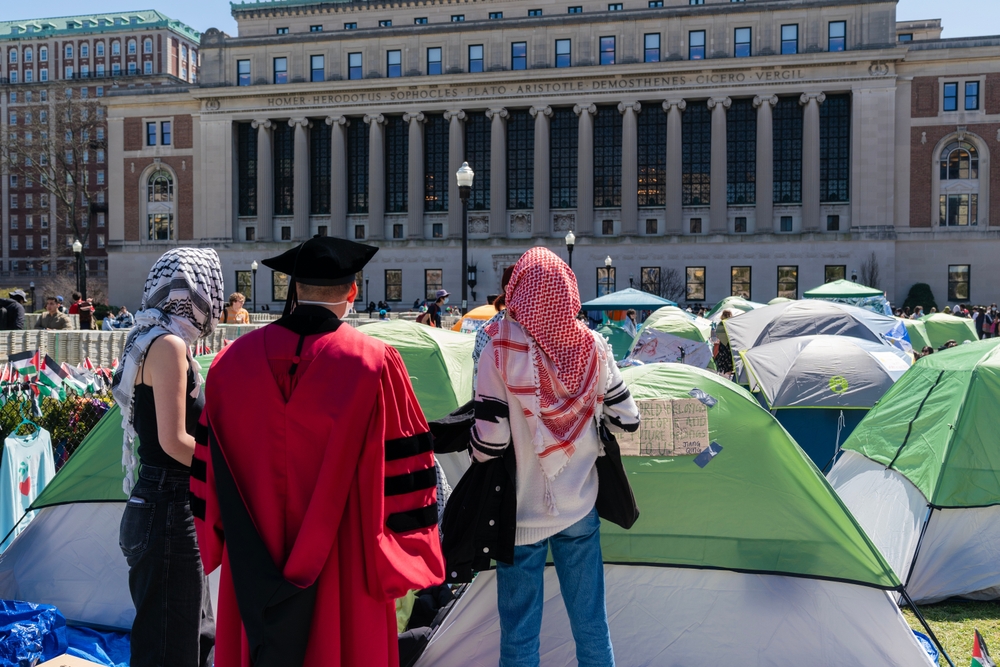
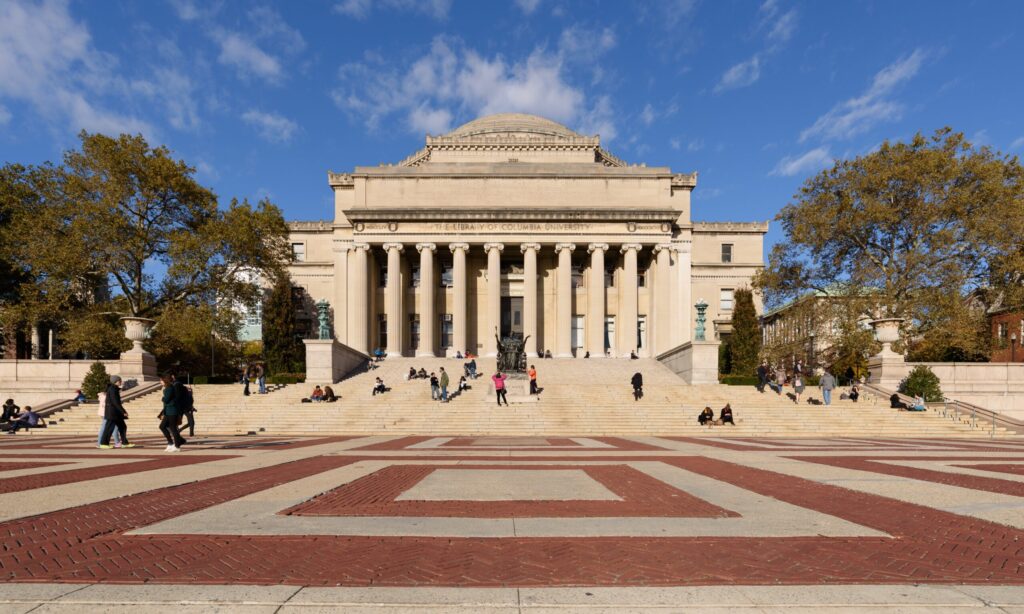
After Columbia University agreed last week to pay over $200 million to resolve federal investigations into campus antisemitism and submit to outside monitoring and policy changes, Harvard is now reportedly in settlement talks of its own, with figures as high as $500 million being discussed. This is not a blip; it’s a reckoning and if done correctly, it will mark a turning point for accountability in higher education. Let’s be clear about what happened. Columbia’s deal with the federal government restored access to large pools of frozen federal funding, but also imposed independent oversight and reforms to hiring and campus policies. Separately, the U.S. Equal Employment Opportunity Commission (EEOC) announced a $21 million resolution for Jewish employees over a hostile work environment – it’s the largest public settlement in nearly two decades – underscoring this is about civil rights, not politics. Now all eyes are on Harvard. The university is fighting in court to restore $2.6 billion in frozen federal research funds even as press reports say it is exploring a settlement path similar to Columbia’s. Education Secretary Linda McMahon has publicly expressed hope that Harvard will ‘learn from’ Columbia’s approach. However, when this ends, it will set a national precedent for what real compliance looks like and whether elite institutions can be compelled to live up to the standards they claim to cherish. The Trend: Rebranding Without Reform At the same time, some institutions are not correcting course, rather their administrators are spending time and money relabeling it. Staff at two prominent universities in Tennessee were recently recorded acknowledging that their Diversity, Equity and Inclusion (DEI) programs were rebranded to skirt enforcement. On Capitol Hill, a Senate hearing focused on the growing practice of swapping “DEI” for friendlier labels like “belonging” or “inclusive excellence,” without changing the underlying policies that have produced discrimination and ideological coercion. That’s not reform – it’s evasion. What Real Accountability Should Include If universities want public trust and federal funds then they should demonstrate measurable change. The New Tolerance Campaign recommends the following: Independent Monitoring with Teeth: Third‑party monitors must have access to records and authority to verify compliance, not just receive reports. Columbia’s model of having independent oversight and required reporting should be the floor, not the ceiling. Transparent Metrics: Publish quarterly data on antisemitic incidents, outcomes of investigations, and sanctions, alongside training content and complaint-resolution timelines. After all, the Trump Administration has already signaled to at least sixty higher education institutions that they expect sustained, documented progress in order for them to fulfill their obligations under Title VI of the Civil Rights Act to protect Jewish students on campus. End Compelled Speech & Political Litmus Tests: No student or employee should be forced to adopt ideological statements to enroll, be hired, or be promoted. This is where the ongoing strategy of ‘rebrand-to-evade’ must be confronted head-on. Equal Protection in Policy and Practice: Apply harassment and safety rules consistently — no double standards for virtue signalers, special interests, encampments, disruption, or threats based on viewpoint. The EEOC’s action at Columbia should be a warning that civil-rights laws still hold their weight. Independent Channels for Jewish Students and Faculty: Establish protected reporting lines and enforce zero-tolerance for targeted harassment, matched with due process for the accused. Recent cases show why both sides of that equation matter. Why This Matters Beyond the Ivy League Schools This isn’t just about Cambridge and Morningside Heights. Federal agencies have widened scrutiny across dozens of campuses, and statehouses are weighing how to protect free expression while ensuring compliance with civil rights. Universities cannot dodge responsibility through semantic games or linguistic restructuring. The status quo of performative tolerance and selective enforcement is collapsing under legal and public scrutiny alike. What You Can Do Today Tell your alma mater: No rebranding without reform. Demand published metrics and independent oversight. Report double standards you witness on campus: Send documentation to us so that we can investigate and, when necessary, mobilize campaigns. We even have a tipline on our website should you want to submit anonymously (click here). Share this blog: Share with parents, alumni, and trustees who expect better from institutions that receive taxpayer funds and philanthropic support. The New Tolerance Campaign was founded to call out hypocrisy and insist on equal standards. The Columbia agreement and the pressure on Harvard shows that accountability is possible – no matter how long it takes. Now we need to make it durable. While we will keep tracking these cases and spotlighting institutions that choose real reform over reputation management, if you have any evidence of rebranding to evade federal compliance or have any horror stories of antisemitism being tolerated or minimized on campus, contact us confidentially. We’re listening and we’re willing to take action!

Past Campaigns

Tell the Philly Library System to Stop Hosting Anti-Israel “Storytime”

Libraries can and should be a resource for engaging with controversial ideas and beliefs, but not for pushing programming that indoctrinates kids with violent and divisive messages. That’s exactly what Philadelphia’s public libraries are doing, as they host pro-Palestine kids’ storytime events that are scheduled to continue throughout the summer. According to the Washington Free Beacon, these events have previously featured: Reading allowed from a book that erases Israel from the map  Coloring pages that promote the so-called “right of return.” A craft that included writing the names of “martyred children of the ongoing Israeli bombardment of Gaza.” A promotional photo of a child wearing a headscarf that says “Jerusalem, we are coming,” in Arabic, a slogan Hamas uses to call for the destruction of the Jewish state. On its website, The Free Library of Philadelphia claims to be “committed to creating and advancing a welcoming environment where our staff and patrons…are respected…we strive to ensure different perspectives, values, cultures, and identities are acknowledged, welcomed, and valued.” That’s a great goal. They should actually implement it. Send a message to library leaders telling them to cancel these events that violate their stated principles and push an agenda that has no place in a children’s story time at the library. (Photo: screenshot taken by Free Beacon)

Blog

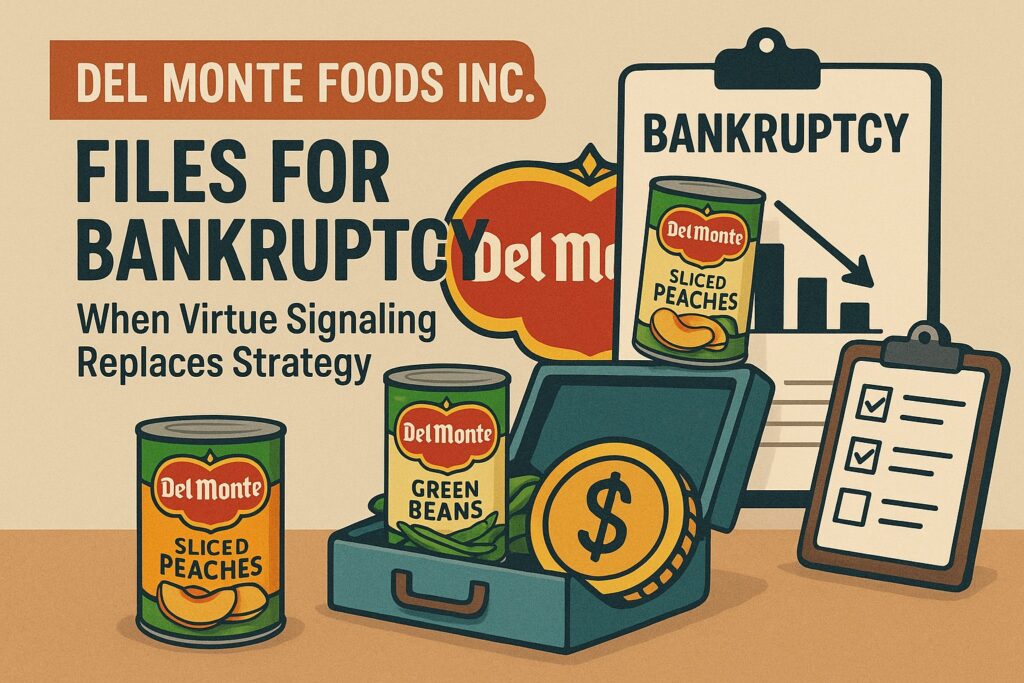
Del Monte’s Collapse: How ESG, DEI, and “Belonging” Couldn’t Save a 138-Year-Old Brand

On July 1, 2025, Del Monte Foods Inc., one of America’s most iconic food brands, filed for Chapter 11 bankruptcy after 138 years in business. Once a household staple, Del Monte is now seeking protection from creditors as it desperately looks for a buyer to keep its legacy alive. But behind the mainstream media headlines about restructuring lies a deeper, more telling story: a corporate culture that traded business fundamentals for ideological activism. And now, the bill has come due. Del Monte’s collapse isn’t just about financial missteps, rather it’s a warning shot to every socially conscious brand or organization prioritizing performance theater over performance metrics. A Perfect Score… And a Perfect Disaster In the 2023–2024 business cycle, Del Monte proudly earned a perfect score (100/100) on the political left’s cherished “Human Rights Campaign (HRC) Foundation’s Corporate Equality Index,” recognizing the canned vegetable and fruit company’s LGBTQ+ workplace policies and extensive diversity, equity, and inclusion (DEI) initiatives. Del Monte even issued a press release celebrating their recognition. To achieve this accolade, Del Monte doubled down on policies around “Diversity, Inclusion, and Belonging” (DIB)—a rebranded form of DEI aimed at not just representation but identity-centered workplace restructuring. From equity training and internal affinity groups to executive-level DEI oversight, Del Monte placed social engineering at the heart of its longstanding brand. And yet, just months later, that same company is now filing for Chapter 11 bankruptcy and desperately searching for a buyer. Know Your Audience One of the top reasons cited by the media for Del Monte Foods’ struggles is that canned food has simply become less popular in the age of the foodie, and that stands to reason. Del Monte Foods is focused on canned and packaged produce, and is completely separate from Fresh Del Monte, which sells fresh items. But it makes Del Monte’s choices even more baffling. The small number of liberal elites who are impressed by DEI programs and HRC accolades are also the type who post farmers’ market selfies and wouldn’t be caught dead cooking with canned green beans. While Del Monte’s efforts may have earned them some points with investors, the substantial amounts of time and money they spent on these programs arguably did nothing to help sell their products. Del Monte appears to have forgotten who they were serving after all. The Disappearing ESG Page Lest you think this was all about principle for Del Monte, their efforts are already starting to disappear from view. Visit Del Monte’s website and scroll to the bottom. You won’t find a tab that highlights their commitment to environmental, social and governance (ESG). However, if you click the “careers” tab and scroll down you’ll find a tab labeled “ESG”. Click it, and you’re greeted with a dead end. Although we reached out to company representatives and are awaiting their comment as to why this phenomenon occurs, this kind of digital vanishing act might not just be a glitch, but it could be symbolic. While the ESG tab is nowhere to be found on their homepage, and it mysteriously leads to nowhere from their “careers” page, a bit of digging reveals that Del Monte’s 2024 ESG Report and other similarly published green communications are still quietly housed under its “sustainability reports” section, buried a layer deeper and harder to find. And even from their main website, Del Monte’s current sustainability section hosted in a small rectangular box on their homepage doesn’t highlight their flagship environmental commitments that their President and CEO Greg Longstreet and ESG Senior Manager Molly Laverty once bragged about to the media. Instead, you have to scroll all the way to the bottom of the “sustainability” webpage and click the “sustainability reports” link in order to find their most recent ESG report and latest work toward their 2022 commitment to net-zero emissions by 2050. Why the sudden demotion of a once-celebrated pillar of their corporate identity? Perhaps it’s the recent change in political headwinds. Or perhaps it’s because when companies hit hard times, it’s often their ideological indulgences they try to scrub or conceal first, especially when those indulgences may have contributed to their storied downfall. Whatever the reason, their actions suggest calculation rather than principles. When Virtue Signaling Replaces Strategy According to Del Monte’s website, their purpose is to be “a leading producer, distributor and marketer of premium quality, primarily branded, plant-based packaged food products that are healthy, tasty, convenient and satisfy the needs of today’s consumers.” Moreover, the company’s stated core values are centered around what they call, “CHOICE,” or the enablement of “a collaborative and innovative culture that brings the best out of our teammates to achieve widespread success.” However, Del Monte’s focus over the last few years, if not longer, has shown that they decided to betray their own stated values in order to virtue signal rather than create greater value. Instead of focusing on core strengths like product innovation, supply chain resilience, or responding to evolving consumer preferences, Del Monte went all in on symbolic gestures. They pledged allegiance to ESG frameworks, sought top billing on DEI or DIB indexes, and used corporate resources to burnish a progressive public image, all while their financial health quietly deteriorated… until now. This is not to suggest that diversity or sustainability are inherently bad. But when these initiatives replace — and don’t supplement – sound business strategy, they become resource draining liabilities. At the end of the day, a perfect HRC, ESG, or DEI “score” didn’t save Del Monte Foods Inc. from a financial collapse. It may have even accelerated it. Now, when you visit the ESG page buried on the careers page, you get this fitting error page. “Oops!” indeed. Why the New Tolerance Campaign Is Watching At the New Tolerance Campaign, our mission is to demand accountability from institutions that preach one thing while practicing another. Del Monte Foods Inc. isn’t alone. Across America, we’re watching other socially conscious companies, Ivy League universities, and nonprofits race to check every progressive box—only to

Blog

Happy Independence Day – July 4, 2025

This Independence Day, we celebrate the enduring promise of liberty and justice for all, and we recommit to holding those who create the greatest cultural impact accountable to these very ideals. Freedom loses meaning when double standards prevail. That’s why we fight every day to expose hypocrisy, defend free expression, and demand equal standards for all — regardless of politics, race, religion, or belief. Let’s honor July 4th not just with fireworks, but with action. Because real patriotism means standing up for truth, fairness, and the values that made and keep America great!

Blog

Columbia University’s Inclusion Crisis: When “Diversity” Becomes Discrimination

Few recent stories illustrate this betrayal of principle more clearly than the disturbing revelations about Columbia University’s interim president, Claire Shipman. According to internal communications obtained and published by the Washington Free Beacon, Shipman privately called for the addition of an Arab board member, while suggesting the removal of a Jewish trustee who had previously spoken out against the rise of antisemitism on campus. “We need to get somebody from the Middle East or who is Arab on our board. Quickly I think,” Shipman texted in January. Days later, Shipman wrote of Trustee Shoshana Shendelman: “She shouldn’t be on the board.” Let us be clear: the problem here is not the desire for diverse representation. True diversity which includes variables like background, identity, and thought is a hallmark of a healthy institution. The problem is when identity becomes a political calculation, and when the inclusion of one group is explicitly tied to the exclusion of another. When Identity Politics Trumps Principles Shipman’s private remarks betray a dangerous mindset: that credibility of Columbia’s leadership rests not on the moral courage or qualifications of its members, but on how well they conform to ideological optics. In this case, Shendelman’s “offense” wasn’t a lack of diversity, rather it was her outspoken opposition to antisemitism on Columbia’s campus during a year of historic unrest, encampments, and violent threats targeting Jewish students. According to the Free Beacon, Shipman’s comments came just weeks after Columbia faced public scrutiny for failing to protect Jewish students from harassment and intimidation. Rather than embrace a trustee willing to address that growing crisis, Shipman suggested she be removed and replaced. This is not diversity. This is evidence of discrimination under the guise of inclusion.  A Pattern of Double Standards This episode doesn’t exist in a vacuum. Columbia University has been one of the epicenters of campus protests since October 7, 2023, when terrorist attacks in Israel triggered widespread political activity on campuses across the country. What began as anti-war demonstrations quickly morphed into chants calling for the destruction of Israel and justifications for political violence. After all, students affiliated with the group, Columbia Students for Justice in Palestine publicly launched and handed out their inaugural edition of “The Columbia Intifada” despite the Ivy League University denouncing their publication. Jewish students at Columbia reported feeling unsafe, unsupported, and in some cases, explicitly threatened. Many alumni and donors began to speak out. Some trustees did as well. Rather than treat these concerns seriously and strive to protect all students equally, Columbia’s top leadership appears to have unethically calculated which voices were politically advantageous and which were not. Claire Shipman’s remarks reflect a growing trend in higher education: the preference for ideological conformity over principled leadership. Tolerance Requires Courage, Not Curation The New Tolerance Campaign (NTC) believes that institutions must consistently reflect their stated values and operate without bias. That means rejecting selective outrage. It means defending freedom of conscience for everyone, not just those with the most fashionable beliefs. And it means acknowledging that diversity and inclusion are not mutually exclusive with moral clarity. Wanting to remove a trustee for calling out antisemitism is not progress; it’s a giant step backward. Appointing someone based solely on ethnicity or political optics is not empowerment; it’s tokenism. True tolerance demands more than hashtags, hollow statements, and civil righteousness. It demands institutional integrity, even when the political winds may shift. The Call to Action As a nonprofit committed to defending the principles of real tolerance, NTC calls on Columbia University to: Denounce identity-based discrimination in all forms, including decisions that exclude individuals based on their religious or political views. Protect trustees, faculty, and students who raise legitimate concerns about antisemitism, especially when they challenge the status quo. Follow the transparent standards for trustee membership as outlined in the Columbia University “Trustees’ By-Laws And Rules Of Order” document, where qualifications, experience and values are prioritized over ideological posturing. Reaffirm their commitment to the First Amendment principles of free expression, religious liberty, and ideological diversity. On Final Thought Columbia University Interim President Claire Shipman’s texts are not just inappropriate, they expose the fragility of performative tolerance in American institutions. If inclusion can only exist at the expense of dissent, then we’ve lost the entire plot. Columbia University has an opportunity — right now — to model true leadership. That doesn’t mean chasing public approval or checking identity boxes. It means defending all communities on campus — Jewish, Arab, Muslim, Christian, atheist, conservative, progressive — with equal commitment and equal courage. At NTC, our mission is to hold powerful institutions accountable to the very standards of inclusion, fairness, and equality they publicly claim to uphold. When these standards are applied selectively, favoring one group while excluding another, true tolerance dies, and performative activism reigns supreme. We will continue to monitor this unacceptable action by Shipman while continuing to shine a light on storied institutions that violate the values they claim to champion. Because tolerance, when applied unevenly, is not tolerance at all.

Legacy NTC Campaigns

SurveyMonkey Restores PragerU’s Account After NTC Grassroots Action

On December 18, 2024, conservative website PragerU announced they were locked out of their account by SurveyMonkey, cutting off access to years of data. To regain access, the popular polling platform demanded PragerU post a disclaimer: “SurveyMonkey is not associated with, nor does it endorse or sponsor this specific content or PragerU.” The content in question? A PragerU video shedding light on the growing number of “detransitioners” — individuals who regret undergoing sex-change treatment and embrace their biological sex. NTC moved quickly — within hours we launched a campaign, and soon after hundreds of messages were sent to SurveyMonkey CEO Eric Johnson and the company’s senior staff calling out their compelled speech ultimatum. 24 hours later, SurveyMonkey restored PragerU’s account access. NTC allows everyday Americans to speak up, and when you do, your voice is heard.       [Photo credit: Kate Ter Harr, 2.0 Generic, via Flickr (cropped)]

Press Releases

New Tolerance Campaign Demands Eventbrite Drop SPLC as Gatekeeper After Targeting Mainstream Conservative Groups

The Progressive “Hate Map” Now Groups Turning Point USA, Focus on the Family, and PragerU with Neo-Nazis, Ku Klux Klan  Washington, D.C. — Today, the New Tolerance Campaign (NTC), a nonprofit watchdog, announced a new campaign calling on Eventbrite, a leading event management platform, to immediately stop relying on the Southern Poverty Law Center (SPLC) as an arbiter of who can and cannot use its services. This demand follows the SPLC’s latest update to its controversial “hate map,” which now lists Focus on the Family, Turning Point USA (TPUSA), and PragerU alongside violent extremists and hate groups like the Ku Klux Klan. NTC launched a national petition urging Eventbrite to disavow the SPLC and affirm that peaceful conservative and Christian groups will not be censored based on politically motivated blacklists. “The SPLC has completely abandoned any pretense of objectivity,” said Chad Banghart, president of the New Tolerance Campaign. “They’ve labeled respected Christian and conservative organizations as ‘hate groups’ simply because they disagree with the progressive agenda. Eventbrite should be ashamed to take cues from such a discredited source—and the American public should be outraged that tech platforms continue to use this kind of ideological gatekeeping to silence dissent.” Eventbrite announced in 2017 that it uses the SPLC’s hate map as a key resource in determining who to deplatform. The company has refused to directly answer whether it will still follow the SPLC’s guidance now that mainstream conservative groups are in its crosshairs. NTC contacted Eventbrite via X (formerly Twitter), but only received non-answers and scripted replies. “The SPLC is not a neutral arbiter—it’s a partisan smear machine,” added Banghart. “And Eventbrite’s continued reliance on them suggests they’re more interested in ideological censorship than in treating all users fairly.” The petition urges Eventbrite to: Publicly disavow the SPLC as a source;  Clarify that groups like Focus on the Family, TPUSA, and PragerU are welcome on the platform;  Affirm its commitment to viewpoint neutrality. About New Tolerance Campaign The New Tolerance Campaign is a nonprofit watchdog organization that mobilizes Americans to hold corporations, media outlets, celebrities, universities, and other influential institutions accountable when they display double standards in their actions and rhetoric.

Legacy NTC Campaigns

Tell Eventbrite: Stop Using the SPLC List to Discriminate

Should Focus on the Family, Turning Point USA, and PragerU be turned down from using popular event management software Eventbrite because a left-wing smear factory added them to a list?  That’s a very real possibility now that the Southern Poverty Law Center (SPLC) has added all three groups to the latest version of its hate map next to groups like the KKK. Eventbrite announced in 2017 that the SPLC’s hate map was one of its top resources for deciding who to deplatform.  That was bad then, but it’s even worse now. Focus on the Family, TPUSA, and PragerU are major Christian or conservative organizations. And their stances have not materially changed. What has changed is that the SPLC is no longer even pretending to be unbiased. If Eventbrite doesn’t want to discriminate against Christians and conservatives, it must disavow the SPLC and declare that non-hateful groups on the map are allowed to use its services. Please sign the petition calling on Everbrite to do the right thing!

Press Releases

New Tolerance Campaign Names Chad A. Banghart as President, Ushering in a Bold New Era

Washington, D.C. — Today, the New Tolerance Campaign (NTC), a nonprofit watchdog dedicated to holding corporations, universities, and other cultural institutions accountable for double standards in the name of “tolerance,” announced the appointment of Chad A. Banghart as its new President.  Banghart brings roughly a decade of leadership experience in political strategy, media, and nonprofit advocacy. He has managed multimillion-dollar grassroots-funded organizations, advised several statewide campaigns, and worked alongside prominent political leaders. His career includes roles within nationwide organizations such as the Republican National Committee and the United States Chamber of Commerce.  “I’m stepping into this role with a clear mission: to NTC to the next level and shine a spotlight on the issues that matter to everyday Americans,” said Banghart. “We’re not here to make noise – we’re here to make change. From universities to corporate boardrooms and beyond, our objectives are clear: expose hypocrisy, mobilize grassroots energy, and hold elite institutions to the standards they claim to uphold.”  Under Banghart’s leadership, NTC will be launching a series of new campaigns and initiatives aimed at directly confronting cultural double standards, expanding its media footprint, and deepening its grassroots engagement across the country.  “NTC is embarking on a significant new phase,” Banghart stated. “With a dedication to truth and accountability, we are creating a movement that empowers everyday Americans to advocate, express their views, and oppose hypocrisy at all levels of society without fear of retaliation or retribution.” Banghart succeeds Gregory T. Angelo, who departed the nonprofit in April to serve in President Donald J. Trump’s Administration. “I’m honored to build on the foundation laid by my predecessor,” Banghart said. “Gregory sharpened NTC’s mission and elevated its public profile. We are grateful for his leadership and wish him continued success in service to our great nation.”    About New Tolerance Campaign The New Tolerance Campaign is a nonprofit watchdog organization that mobilizes Americans to hold corporations, media outlets, celebrities, universities, and other influential institutions accountable when they display double standards in their actions and rhetoric.

Hate Map

Guy Christensen

Guy Christensen is a TikTok influencer who goes by the handle YourFavoriteGuy and has more than 3 million followers. He claims to be 19 years old and to live in Pennsylvania. Christensen posted a TikTok video supporting the May 21, 2025, killing of two Israeli embassy staffers. His video (now deleted by TikTok) stated: “I do not condemn the elimination of the Zionist officials who worked at the Israeli embassy last night…I want to urge you first to support [the shooter] Elias’ actions. He is not a terrorist. He’s a resistance fighter, and the fact is that the fight against Israel’s war machine, against their genocide machine, against their criminality, includes their foreign diplomats in this country.”

Hate Map

Democratic Socialists of America – Liberation Caucus

The Liberation Caucus describes itself on X as “A Marxist-Leninist-Maoist caucus in DSA.” After Elias Rodriguez shot two Israeli Embassy staffers in cold blood on May 21, 2025, yelling “Free, free Palestine,” the caucus posted “Free Elias Rodriguez and all political prisoners” on X and endorsed a statement saying  the shooting was “a legitimate act of resistance against the zionist state.” The Caucus has held to its violent stance despite pushback from DSA leadership.

Hate Map

Bronx Anti-War

Bronx Anti-War describes itself as “A Lënapehòkink-based working-class, BIPOC-led, anti-imperialist organization.” Immediately after the murder of two Israeli Embassy staffers in May of 2025, the group posted in praise of the shooter, saying, “What Elias Rodriguez did is the highest expression of anti-Zionism,” and “We need more Elias Rodriguez in this world.”

Blog

GiveSendGo’s Principled Stance in a Time of Viral Rage

Crowdfunding platform GiveSendGo has been a hero to conservatives in recent years after its more mainstream competitor, GoFundMe, became notorious for cancelling conservative-leaning campaigns. But GiveSendGo’s commitment to allowing all campaigns (except for fraud or expressly illegal activity) has recently been tested, and it’s stood its ground. We have to applaud their principled stance, even as two recent campaigns reveal some of the ugliest parts of our cultural moment. On April 2, Karmelo Anthony got in a tussle with a student at a track meet. He proceeded to pull out a knife and stab the other student in the chest, killing him. Anthony has admitted to the stabbing, but claims it was self-defense. While Anthony is still going through the legal process to see if this defense holds up, the fact remains that a young man who was unarmed is now dead. Anthony is black, and his victim was white. That fact has made this something of a cause célèbre for a group of people who want to make this a racial justice issue. They started a GiveSendGo campaign for Anthony, which has received over $525,000 to date. Angry comments that GiveSendGo co-founder Jacob Wells very diplomatically referred to as “championing a racial narrative” have regularly accompanied the donations. Wells says he’s “not proud” of the fundraiser, but the site is sticking to its principles and allowing the campaign to continue. But the problem isn’t one-sided. A woman named Shiloh Hendrix recently went viral for calling a young man, who was allegedly trying to steal from her diaper bag, the n-word. She has since repeatedly doubled down on her use of the term. She also has a GiveSendGo campaign, and donors have given her over $733,000 and rising. The comments on this campaign also contain racially-charged anger, mirroring the Anthony campaign but in reverse. It’s no secret that both the black and white communities have felt extremely aggrieved in recent years, but the fact that that anger could make people like Anthony and Hendrix millionaires is a dire warning of just how bad it has become.  Many donations appear to be motivated less by support for the individuals involved and more by a desire to “settle the score” in broader racial or cultural battles. As any observer of history knows, vengeance of this type doesn’t end problems; it worsens them.  GiveSendGo didn’t intend to become a battleground for racial resentment. However, as co-founder Jacob Wells put it, “In free societies, people can say stuff that is divisive and not unifying.” That’s the challenge — and the burden — of living in a free society. We can’t rely on platforms to clean up our cultural mess. If we want something better, we have to be the ones to build it: with empathy, responsibility, and true tolerance. There’s no time to lose.

Scroll to Top