
NTC President Joins Richmond’s Morning News with John Reid
NTC President Gregory T. Angelo recently joined Richmond’s Morning News host John Reid to discuss DEI initiatives in higher education around Virginia. Listen to the full segment here.

NTC President Gregory T. Angelo recently joined Richmond’s Morning News host John Reid to discuss DEI initiatives in higher education around Virginia. Listen to the full segment here.

When educators are ignorant of history, history is in danger of being rewritten. Earlier this month, the Gadsen flag — a symbol that represents rebellion against tyranny — was ironically at the center of controversy. Jaiden Rodrigez, a 12-year-old student attending the Vanguard School in Colorado Springs, was kicked out of his seventh-grade classroom by administrators for wearing a Gadsden flag patch on his book bag. A surreptitiously recorded video released by Connor Boyack shows Jaiden and his mother having a discussion with the school’s vice principal, who declares that the reason the flag cannot be displayed is “due to its origins of slavery and the slave trade.” This is, of course, entirely false — and a gross rewriting of the Gadsden flag’s history. The iconic yellow flag, depicting a rattlesnake with the phrase “Don’t Tread On Me” below it, was designed by South Carolina soldier and delegate Christopher Gadsden in 1775 during the Revolutionary War. Soon after its creation, the first United States’ Naval commander-in-chief, Commodore Esek Hopkins, hoisted the flag from his ship, the USS Alfred. In February 1776, the flag was submitted to the Provincial Congress of South Carolina by delegate Gadsden as a pro-freedom symbol and a warning to the British not to violate the liberties of Americans. Being ignorant of the Gadsden flag’s origins is one thing, but for an educator to assert an entirely rewritten its history while simultaneously attempting to erase its display is unacceptable. The video of the exchange, filmed by Jaiden’s mother, quickly went viral, amassing eight million views in one hour and racking up tens of millions of views across all social media platforms. Online outrage soon exploded — and it was channeled into action. People across the country sent messages to Vanguard School administrators lambasting their poor decision and lack of historical knowledge. It worked. Within hours, the Vanguard School board of directors called an emergency meeting and issued a statement siding with Jaiden asserting the institution’s stated values. “From Vanguard’s founding we have proudly supported our Constitution, the Bill of Rights, and the ordered liberty that all Americans have enjoyed for almost 250 years. The Vanguard School recognizes the historical significance of the Gadsden flag and its place in history. This incident is an occasion for us to reaffirm our deep commitment to a classical education in support of these American principles. At this time, the Vanguard School Board and the District have informed the student’s family that he may attend school with the Gadsden flag patch visible on his backpack.” The next day, Jaiden posted a video on social media sharing that kids were “hyped up” by the attention he gained for standing his ground. Some even put Gadsden flag stickers on their lockers as a new trend. Jaiden’s story is doubly instructive: it illustrates the courage required to combat virtue-signaling bullies with a superiority complex — even under threat of getting canceled, losing a job or friends, or getting kicked out of school. This incident also showed the power that grassroots action has to hold institutions accountable. It wasn’t just Vanguard School students and parents pushing back; it was the people, and the people got results. If Jaiden and his mother hadn’t taken a stand, the Gadsden flag would have been another piece of culture surrendered to the revisionists. Instead, their resolve provided a valuable lesson: When faced with woke bullies, don’t let them tread on you. [Photo credit: Connor Boyack / @cboyack (screenshot of video on X)]

NTC President Gregory T. Angelo joined 93.9 WakeUP Mid Missouri host Branden Rathert to discuss NTC’s grassroots work against the politicization of American institutions. Watch the full segment here.
NTC President Gregory T. Angelo joined “Need To Know” with Jeff Angelo during a segment titled “are woke companies REALLY going broke?” Listen to the full appearance here.

When it comes to tracing the roots of so-called Environmental, Social, Governance (ESG) and Diversity, Equity, Inclusion (DEI) requirements, all roads lead back to “The Big Three”: Blackrock, Vanguard, and State Street. Together, this triad of financial behemoths own the majority of stock in 88% of the S&P 500 companies; they own at least 5% of 97.5% of all S&P 500 companies. The influence of The Big Three is pervasive and near-omnipotent. These index funds control about 25% of all stock of every public company in the world. Blackrock manages nearly $10 trillion in assets; Vanguard manages $8 trillion, and State Street has more than $4 trillion — an amount nearly equivalent to the United States GDP, and over three times as much money spent by the United States federal government in all of 2022. Their agenda is not a hidden secret. Blackrock CEO Larry Fink has on numerous occasions admitted to forcing behaviors based on gender and race, and State Street has demanded companies disclose the diversity data of their employees. If companies refuse, State Street has promised to vote against investing in them. This dynamic of consolidated power leads to less market competition. It also allows The Big Three to demand ESG and DEI standards in the marketplace. Conform to their social agenda…or else. Take, for example, energy giant Exxon Mobil: last year, Blackrock, Vanguard, and State Street all supported the replacement of certain Exxon Mobil board members who opposed climate change initiatives. They were replaced with people who promised to make climate change a priority. Similar efforts have been made by Blackrock and State Street to punish the Walmart Board of Directors if they do not adopt similar climate and diversity standards. The stranglehold of The Big Three isn’t limited to the corporate world; they’ve begun to extend their influence to governments as well. Blackrock has already invested hundreds of millions in climate initiatives in third-world countries, making them beholden to the financial giant. Blackrock has likewise pressed its climate and ESG initiatives beyond the third world. Their tentacles recently penetrated New Zealand. The country partnered with Blackrock to ensure a 100% renewable electricity power grid, leaving tens of thousands out of work with new fossil fuel standards ending their occupations, despite the country already running on 82% renewable energy from hydroelectric dams. Blackrock, Vanguard, and State Street not only have an exorbitant amount of power over global markets, but also global culture. Curtailing their reach will require financial and grassroots pushback. Otherwise, their aggressive agendas won’t end with ESG and DEI; they’ll only have just begun.

The New Tolerance Campaign has demanded answers from Oregon Health & Science University (OHSU) about why they refused to provide care to a cancer patient after she criticized their extreme LGBT agenda. Read the full article in The Western Journal here.

The New Tolerance Campaign is demanding answers regarding a report that Oregon Health and Science University has denied a patient cancer treatment due to her views on radical gender ideology. Read the full article in The Daily Caller here.

The New Tolerance Campaign has demanded answers from Oregon Health & Science University (OHSU) about why they refused to provide care to a cancer patient after she criticized their radical gender ideology on display in the hospital. Read the full article here.

We know cancel culture can cost people their jobs. Now, it can cost you your life. Just ask Marlene, a cancer patient receiving treatment at a facility run by Oregon Health & Science University (OHSU). After expressing statements critical of radical gender ideology, she received correspondence from OHSU stating they would no longer treat her — and not just for cancer. The letter banned Marlene “from all OHSU Family Medicine clinics, including Immediate Care.” The Hippocratic Oath demands doctors “practice two things in dealings with disease: either help or do not harm the patient.” OHSU is upholding neither. Stand up for Marlene and against medical tyranny! Send a message to Oregon Health & Science University Chairman Wayne Monfries and the OHSU Board of Directors demanding answers as to why OHSU values social issues over health!

NTC President Gregory T. Angelo went on The Bob Cordaro Show to discuss the recent firestorm around Jason Aldean’s new song “Try That in a Small Town” as well as the driving forces behind cancel culture, and the extremism of the current LGBTQ movement. Listen to the full episode here.

As DEI retreats in higher education, its influence continues to grow in corporate America In the wake of the Supreme Court of the United States (SCOTUS) overturning affirmative action in college admissions in late June, there has been a subtle movement away from Diversity, Equity, and Inclusion (DEI) initiatives on many college campuses. Despite the common refrain that ending affirmative action is racist and is deeply unpopular with the American public, it routinely is rejected by American voters across the country. California voters overwhelmingly dismissed overturning the state ban on affirmative action in 2020, with 57% voting to keep the ban in place. Nationally, a supermajority of the American public — close to 70% — oppose considering race in college admissions. The vast majority of colleges and universities condemned the affirmative action decision by the Court and vowed to maintain avenues of factoring race into their admissions process, which is clearly contrary to their stated missions of equality. Harvard, an institution of higher education at the center of the SCOTUS case, has a Mission Statement that declares, “No one should be harmed or denied an equal opportunity to thrive because of their race, sex, ethnicity, sexual orientation, gender identity, national origin, disability, or religion” — a hypocritical statement in direct conflict with the school’s affirmative action policies. In the wake of the SCOTUS decision, numerous institutions have begun to cut back on some of their so-called “diversity, equity, and inclusion” (DEI) initiatives that contradict equal opportunity for all students. The New College of Florida, for example, dissolved its DEI office, as did the University of Arkansas. The University of Missouri, the University of Kentucky, and other schools announced an end to race-based scholarships, seeing them as next in line to be challenged in the courts. But as DEI faces retreat in higher education, its influence continues to grow in corporate America. DEI initiatives across the country have been supercharged in recent years. Following the riots of 2020, major corporations such as Microsoft, JPMorgan Chase, and Goldman Sachs all pledged to enforce racial quotas and meet diversity goals within five years (2025). The corporations exceeded these goals. Microsoft, for example, hit their targets in 2023. Their response? To commit to even more divisive DEI projects. In 2019, financial giant Goldman Sachs committed to racial quotas for new interns, and financial incentives to black and hispanic workers. Tech companies such as Google and Facebook have embraced similar quotas and race-based practices. The Supreme Court decision striking down affirmative action in college admissions marked one step toward re-instituting a nationwide culture in which reward is based on merit rather than race. Whether we as a country continue on this journey in academia and in business remains to be seen.
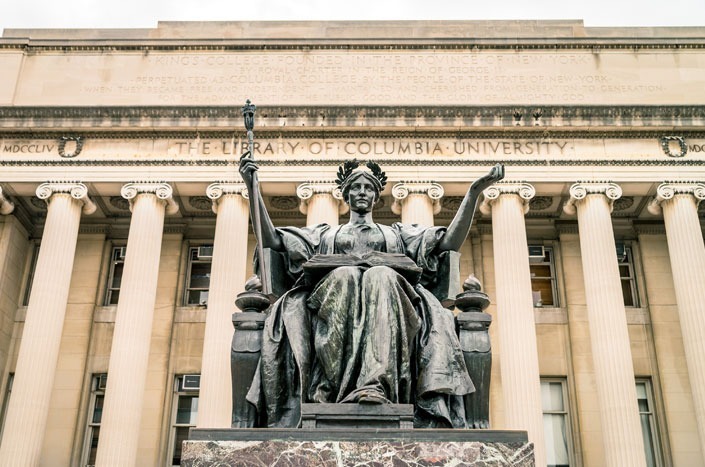
University presidents wield substantial power to promote — or limit — free expression on college campuses. The president of Columbia University in New York City is no exception: From the moment she took office at the ivy league school on July 1, she inherited the challenge of protecting student and faculty free speech at an institution which maintains restrictive speech codes and ranks last in the Foundation for Individual Rights and Expression’s (FIRE) “2022-23 College Free Speech Rankings.” As an adopter of the Chicago Statement, the gold standard for an institutional commitment to free expression, Columbia is obligated to defend and uphold speech rights for its students and faculty. One way to put its promise to protect free expression into practice is to reform restrictive policies in ways that satisfy various campus imperatives while also respecting free speech promises and principles. To ensure that Columbia not only promises to protect free speech but actively defends it, the New Tolerance Campaign is partnering with FIRE to empower students, alumni, and concerned citizens to urge Columbia University’s new president to improve the school’s speech policies. Ask Columbia’s new president, Nemat “Minouche” Shafik, to fulfill Columbia’s duty to protect free expression.
NTC President Gregory T. Angelo went on The John Reid Show to discuss Amazon shutting down a customer’s SmartHome after false accusations of racism and how NTC utilized their grassroots supporters to demand answers from Amazon CEO Andy Jassey. Listen to the full episode here.
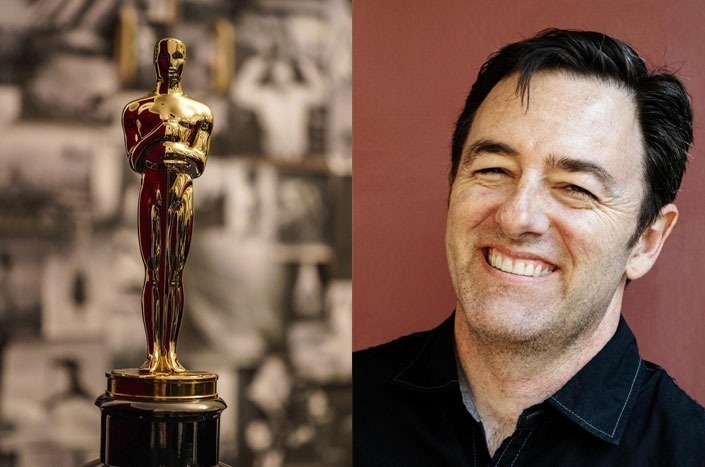
Spurred on by the “#OscarsSoWhite” progressive Twitter pile-on of 2015 and catalyzed during the Black Lives Matter movement of 2020, the Academy Awards has implemented revised Oscar eligibility criteria to include mandated diversity requirements — and the list is quite something to behold. On-screen “at least one of the lead actors must be from an underrepresented racial or ethnic group,” the new rules state. “30% of actors in secondary roles be from underrepresented groups such as LGBT+ and people with cognitive or physical disabilities,” and the plot must “center around an underrepresented group.” Off-screen “the leading producers must have at least two members from an underrepresented group on their staff,” and “six members of the crew/technical team must be from those same underrepresented groups,” and “senior executives on the film must also meet certain thresholds for those underrepresented groups.” The rules even extend to interns! Productions must have “at least two interns from underrepresented groups, and those opportunities must be prioritized” over those in properly represented groups.” How will all of this be enforced? With a literal checklist. Movies will need to submit an “Academy Inclusion Standards form” for major award consideration. And that’s not all: the Diversity Police will also be on the case — the Academy will conduct spot checks and interviews to ensure producers aren’t fudging the numbers on their forms. It’s estimated that of the 95 Best Pictures in the history of the Oscars, over half would not qualify under these new diversity thresholds. Gone with the Wind, Wizard of Oz, Citizen Kane, Casablanca, Singin’ in the Rain, The Sound of Music, The Godfather, Star Wars, Taxi Driver, Goodfellas, and Schindler’s List all would have been ineligible for top honors. Even recent critically acclaimed movies such as 1917 and The Irishman wouldn’t make the cut. “Anything that interrupts the creative process is a potential problem,” film critic and founder of Hollywood in Toto Christian Toto (pictured) told the New Tolerance Campaign. “Some stories may be perfect for an Oscar-worthy presentation, but they may not be told because they don’t align with the approved narratives. We may see an artificial uptick in diversity numbers, but does that include other groups marginalized by Hollywood — conservatives and Christians? Why don’t they get special protection given how they’re ignored or maligned within show business?” Conservatives aren’t the only ones skeptical of the Academy’s new mandates. Richard Dreyfuss, known for his roles in Jaws and American Graffiti, (two movies that also wouldn’t make the cut today) said the new standards “make him want to vomit.” Others haven’t been as outspoken. “Actors are very afraid to speak out against the new diversity rules,” Toto said. “The New York Post’s story on the subject had several industry critics but no one shared their name. Fear is very powerful in Hollywood, and if you’re suspected of being critical of aggressive diversity measures there will be consequences.” All of it makes one wonder: If only some movies receive Oscar consideration, can any objectively be called “Best Picture”?