Amicus Briefs

Amicus Briefs, Defending the Trump Administration

Amicus Brief in Support of President Trump’s Effort to End Birthright Citizenship

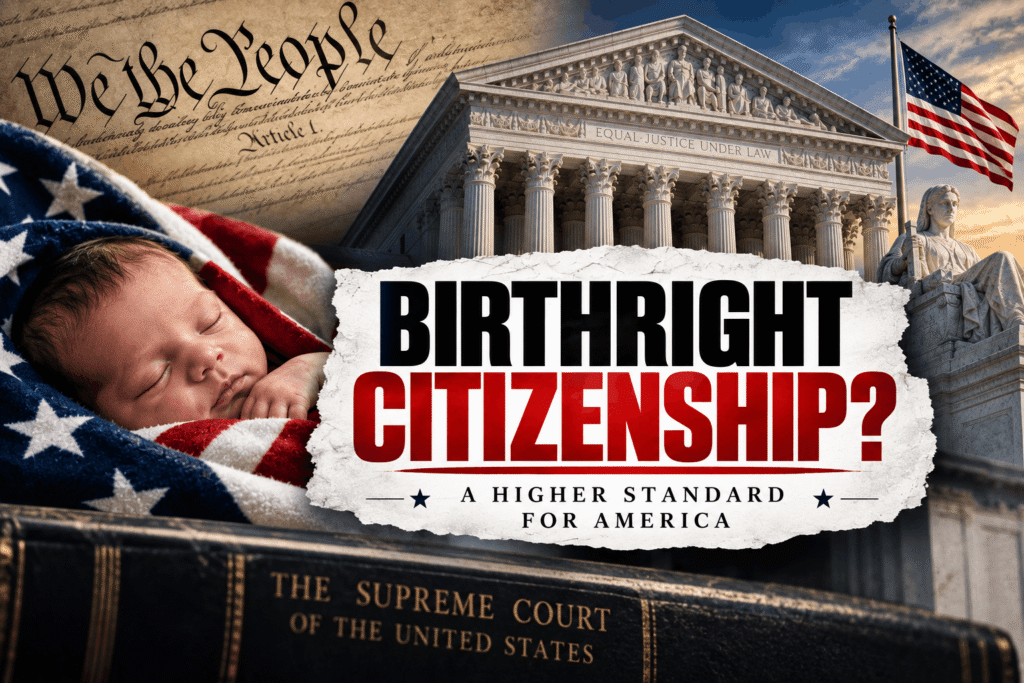
Our amicus brief urged the U.S. Supreme Court to reject automatic birthright citizenship for children of illegal aliens and uphold President Trump’s effort to enforce the 14th Amendment according to its original meaning. The brief explained that the Citizenship Clause was adopted to overturn Dred Scott and guarantee citizenship to formerly enslaved Americans and their children—not to automatically grant citizenship to the children of individuals who entered the country illegally. We argued that interpreting the Constitution otherwise would allow mass illegal immigration to permanently reshape the American electorate and transfer political power through childbirth. We also urged the Court to reconsider precedents that have created additional incentives for illegal immigration, including Plyler v. Doe and Evenwel v. Abbott, arguing that birthright citizenship for children of illegal aliens should not be treated as a constitutional mandate when doing so would worsen the nation’s immigration crisis and restrict the ability of Congress and the American people to determine immigration policy. [ AMICUS BRIEF ]
Amicus Briefs

Amicus Brief to Defend Election Integrity and State Authority to Verify Voter Eligibility

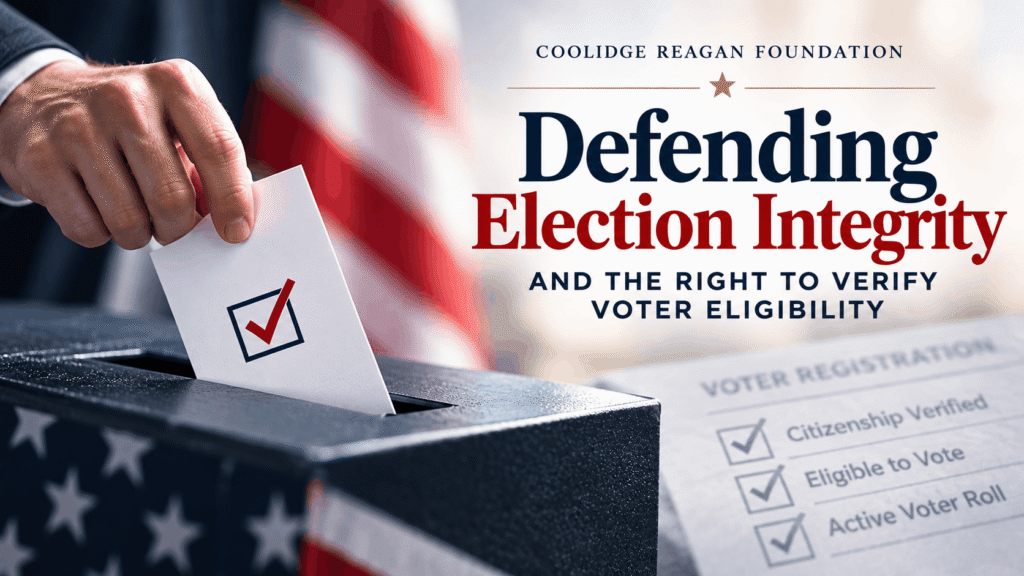
The Coolidge Reagan Foundation joined the Alabama Republican Party, and Alabama Republican National Committeeman Bill Harris in filing an amicus brief supporting Alabama Secretary of State Wes Allen’s efforts to verify voter eligibility and protect the integrity of the state’s elections. In response to legal challenges brought by the U.S. Department of Justice and voting rights organizations, the Foundation argued that the National Voter Registration Act does not prohibit states from requesting citizenship verification from registered voters whose government records indicate potential ineligibility. The brief further defended the authority of election officials to investigate suspected violations of election law without automatically constituting unlawful voter intimidation. The Foundation urged the federal court to dismiss the Justice Department’s complaint and specific claims brought by the Alabama Coalition for Immigrant Justice, reaffirming its commitment to lawful elections, accurate voter rolls, and protecting the voting rights of eligible American citizens. [ AMICUS BRIEF ]

2024 Victories, Amicus Briefs

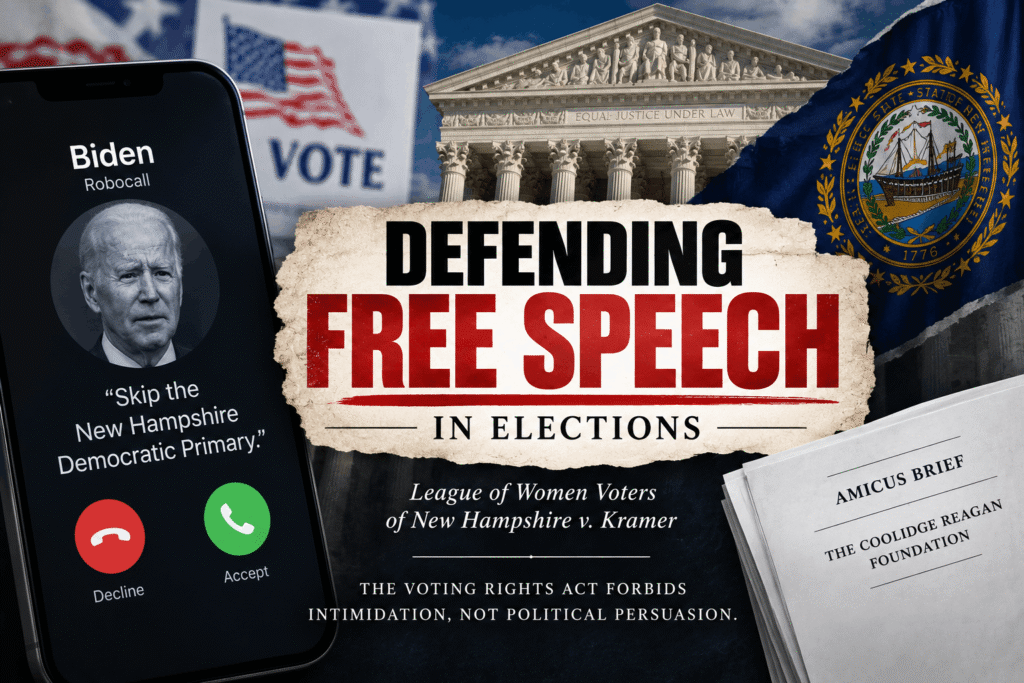
Amicus Brief in Opposition to Free Speech Lawfare in New Hampshire

The Coolidge Reagan Foundation filed an amicus brief in League of Women Voters of New Hampshire v. Kramer, a case involving AI-generated “Biden” robocalls that urged voters to skip the state’s Democratic primary. Our brief defended a clear principle: the Voting Rights Act forbids intimidation, not political persuasion. We argued that Section 11(b) does not create a private right of action, meaning activist groups cannot weaponize it to silence political speech. Expanding it to cover misleading or controversial messages would turn protected speech into a federal crime. Free speech is the cornerstone of democracy—even if some may find it offensive or confusing. Efforts to stretch voting laws beyond their text threaten both the First Amendment and the integrity of legitimate election enforcement. [ AMICUS BRIEF ]

2024 Victories, Amicus Briefs, Defending the Trump Administration

Amicus Brief in Support of President Trump in Overreaching Indictment

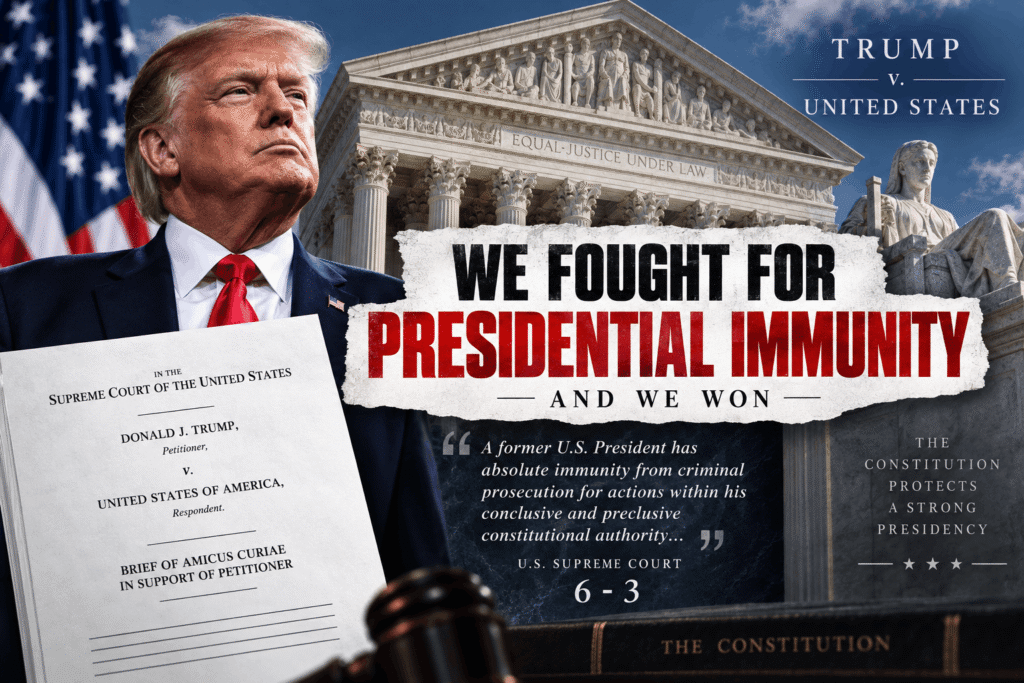
Our amicus brief in Trump v. United States urged the Supreme Court to affirm that a President cannot be criminally prosecuted for official acts performed while in office. The brief highlighted how the overreaching indictment in this case burdened the fundamental values underlying the First Amendment and infringed upon the President’s constitutionally protected right to engage in political speech. The President’s communications and actions related to the 2020 election were part of his official duties and political speech—both protected under Article II and the First Amendment. As a result, we urged the Court to apply the doctrine of constitutional avoidance by interpreting the criminal statutes narrowly to exclude the President’s official conduct, warning that failure to do so would chill future presidents from faithfully executing their duties and set a dangerous precedent for partisan prosecutions. We were pleased that in the end, the Supreme Court reached a 6-3 decision for Trump, stating that a former U.S. President has absolute immunity from criminal prosecution for actions within his conclusive and preclusive constitutional authority, at least presumptive immunity from prosecution for all his official acts, and no immunity for unofficial acts. [ AMICUS BRIEF ]

Scroll to Top