Intolerance on Campus

Legacy NTC Campaigns

Urge Columbia University’s New President to Hit the Reset Button on Support for Free Speech

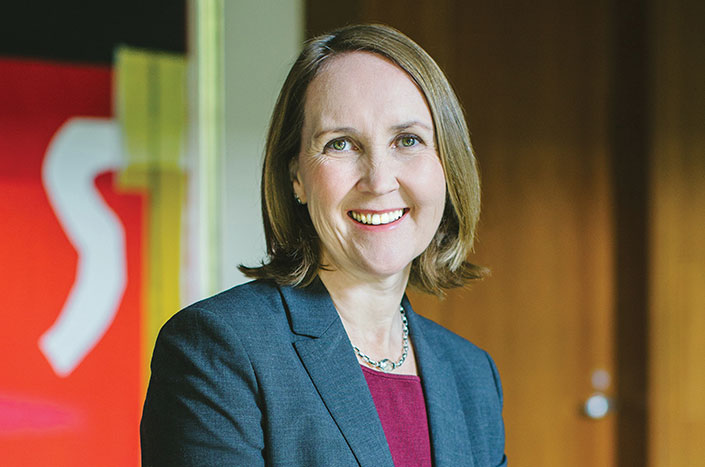
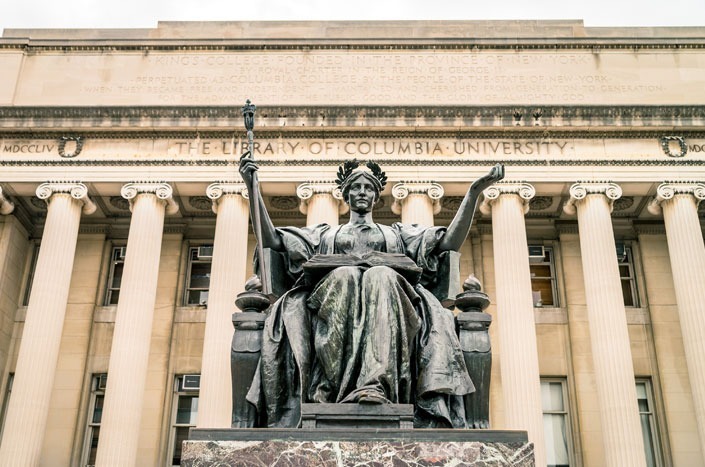
University presidents wield substantial power to promote — or limit — free expression on college campuses. The president of Columbia University in New York City is no exception: From the moment she took office at the ivy league school on July 1, she inherited the challenge of protecting student and faculty free speech at an institution which maintains restrictive speech codes and ranks last in the Foundation for Individual Rights and Expression’s (FIRE) “2022-23 College Free Speech Rankings.” As an adopter of the Chicago Statement, the gold standard for an institutional commitment to free expression, Columbia is obligated to defend and uphold speech rights for its students and faculty. One way to put its promise to protect free expression into practice is to reform restrictive policies in ways that satisfy various campus imperatives while also respecting free speech promises and principles. To ensure that Columbia not only promises to protect free speech but actively defends it, the New Tolerance Campaign is partnering with FIRE to empower students, alumni, and concerned citizens to urge Columbia University’s new president to improve the school’s speech policies. Ask Columbia’s new president, Nemat “Minouche” Shafik, to fulfill Columbia’s duty to protect free expression. 

Past Campaigns

Thank the Dean of Stanford Law for Recommitting to Free Speech

Earlier this month an insolent mob of unhinged students sabotaged a Federalist Society chapter meeting at Stanford Law School. Their goal: to shut down speaker Stuart Kyle Duncan, a judge on the U.S. Court of Appeals for the 5th Circuit. Worst of all: a member of the Stanford Law faculty led the charge! Tirien Steinbach, the school’s associate dean for diversity, equity, and inclusion (DEI), commandeered the podium and lectured the judge, insisting he was responsible for “disenfranchisement,” “harm,” and “tearing at the fabric of this community.” In the aftermath of this shameful display, Stanford Law apologized to Duncan, igniting protests on campus. But Dean Jenny Martinez didn’t back down. Last week, Dean Martinez doubled down in a lengthy letter underscoring that a “commitment to diversity and inclusion means that we must protect the expression of all views.” Principled stands like this are becoming increasingly rare in higher education. A commitment to welcoming diverse views used to be expected at universities; these days, it is worthy of praise. Send a message of thanks to Dean Martinez using the form on this page. Hopefully her courage is contagious.       [Photo credit: Timothy Archibald / Stanford Law School (cropped)]

Past Campaigns

Emerson College Must Appoint a President Who Supports ‘Diverse Ideas’ and ‘Free Expression’

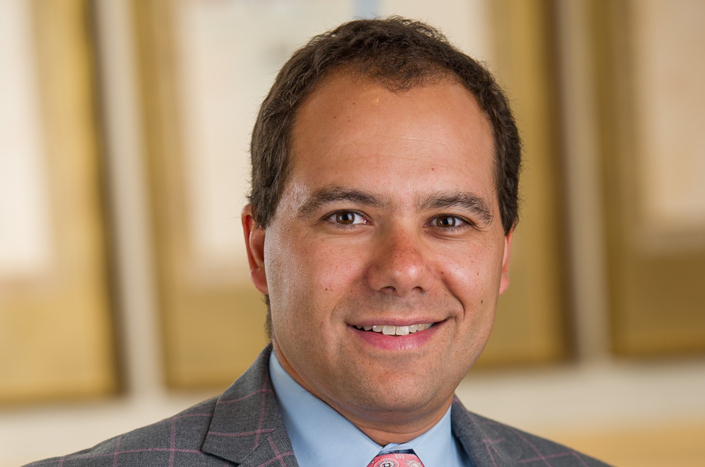
University presidents wield substantial power to promote — or limit — free expression on American college campuses. The future president of Emerson College in Boston, MA, is no exception: Whoever assumes this role will inherit the challenge of protecting student free speech on a campus with an unfortunate track record of limiting it. Over the past year and a half, Emerson has been embroiled in substantial controversy for suppressing student expression. Despite receiving multiple letters from the Foundation for Individual Rights and Expression (FIRE) listing concerns about its actions, Emerson has doubled and tripled down on campus censorship. Emerson’s own Community Standards affirm that “[a]s an institution dedicated to Communication and the Arts, the First Amendment of the US Constitution is of high importance.” The college’s actions over the past 18 months, however, call that commitment into question, even earning Emerson a place on FIRE’s 2022 list of the “10 Worst Colleges for Free Speech.” Now, as Emerson searches for a new university president, its Presidential Search Prospectus describes “[a]ppreciation for diverse ideas and the free expression of them” as a “non-negotiable value” underpinning the college’s search. To ensure that Emerson holds fast to this commitment, the New Tolerance Campaign is partnering with FIRE to empower students, alumni, and concerned citizens to voice their support for a pro-free speech president at Emerson. Tell Emerson’s Presidential Search Committee to fulfill its duty and appoint a president who supports free expression! UPDATE (01/12/23): Emerson College announced the appointment of Dr. Jay M. Bernhardt as the school’s next president. Our allies at FIRE are vetting Dr. Bernhardt for his record on support for different views and free speech on campus. Check back for updates!

Past Campaigns

Journalistic Ethics Require Berkeley Beacon to Run Student Rebuttal

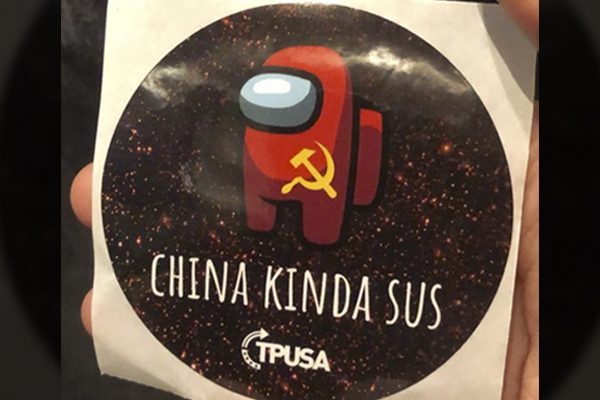
Last fall, NTC advocates jumped into action when Emerson College derecognized the school’s TPUSA affiliate. The center-right student organization’s offense? They distributed stickers critical of the oppressive communist government of China. The group continues to push to have their charter reinstated, but the attacks against them from fellow students continue. The school’s student newspaper the Berkeley Beacon published an op-ed filled with smears against TPUSA and its student membership. When Emerson’s TPUSA chapter President Sam Neves asked to run a rebuttal, the response from Editor-in-Chief Vivi Smilgius was . . . NO. Ms. Smilgius cited concerns about instances of “defamation,” “misinformation,” “aggression towards a named individual,” and “questionable conjecture” in Neves’ proposed retort — but the Berkeley Beacon applied no such standards to Mr. Chen’s piece, which asserted TPUSA promotes “racist” views, is guilty of “spreading falsehoods,” termed TPUSA’s founder Charlie Kirk a “con artist,” and questioned whether the very “existence” of TPUSA should be allowed. New Tolerance Campaign President Gregory T. Angelo attempted to work with the Berkeley Beacon quietly behind-the-scenes to resolve this matter, but the Beacon refuses to act in good faith. Now, the newspaper needs to hear from you. Journalistic ethics dictate that, at the very least, the school’s TPUSA chapter be afforded the ability to respond in print to the accusations made against its members. Send a message to Berkeley Beacon Editor-in-Chief Vivi Smilgius: Journalistic ethics require that the Berkeley Beacon allow TPUSA to respond to its published allegations!

Legacy NTC Campaigns

NTC Advocates Emailed Georgetown Law Asking Them To Uphold Their Own Free Speech Policy

Update (6-7-2022):  NTC advocates rallied to support Shaprio and emailed Georgetown Law Dean William Treanor asking him to accept Ilya Shapiro’s apology and uphold Georgetown’s policy on freedom of speech.  Sadly, Georgetown fell short of its own stated policies about free speech. After Georgtown Law’s “investigation” into Shapiro’s tweet they allowed him to stay on faculty, but made it clear that they could monitor his social media. Following that, Shapiro joined the Manhattan Institute as their Director of Constitutional Studies.  On January 21, constitutional law scholar and expert on the Supreme Court Ilya Shapiro was announced by Georgetown Law as executive director and senior lecturer at the Georgetown Center for the Constitution. Shapiro’s role was set to begin on February 1 — until a tweet about President Biden’s insistence that his next SCOTUS pick will be a black woman. “Objectively best pick for Biden is Sri Srinivasan, who is solid prog & v smart. Even has identity politics benefit of being first Asian (Indian) American,” Shapiro tweeted on January 26. “But alas doesn’t fit into the latest intersectionality hierarchy so we’ll get lesser black woman.” Shapiro deleted the tweet and apologized. Soon thereafter, Georgetown’s Black Law Students Association demanded that Shapiro’s job offer be rescinded. More generally, Shapiro was expressing a sentiment shared by an overwhelming majority of Americans, 76% of whom want Biden to consider “all possible nominees” for the highest court according to an ABC News/Ipsos poll released on January 30, rather than play identity politics and further politicize what should be an objective body. And as Dan McLaughlin framed it in National Review: “Ilya’s use of the words ‘lesser black woman’ in this context was not the ideal way of phrasing this critique, but then, Twitter is fast-moving, space-constrained, and has no edit function, so it is hardly unusual to see things phrased there awkwardly.” Contrast this with Georgetown’s handling of Georgetown professor Carol Christine Fair, who wrote in 2018 that all “entitled white” Republicans supporting the nomination of Brett Kavanaugh to the Supreme court deserved to be killed: “All of them deserve miserable deaths while feminists laugh as they take their last gasps,” she declared. “Bonus: we castrate their corpses and feed them to swine? Yes.” Georgetown’s response to inquiries about Ms. Fair? “Our policy does not prohibit speech based on the person presenting ideas or the content of those ideas, even when those ideas may be difficult, controversial or objectionable,” the university said in a statement to Fox News. “While faculty members may exercise freedom of speech, we expect that their classrooms and interaction with students be free of bias and geared toward thoughtful, respectful dialogue.” Georgetown’s Human Resources Policy Manual states that “it is not the proper role of a university to insulate individuals from ideas and opinions they find unwelcome, disagreeable, or even deeply offensive. Deliberation or debate may not be suppressed because the ideas put forth are thought by some or even by most members of the University community to be offensive, unwise, immoral, or ill conceived. It is for the individual members of the University community, not for the University as an institution, to judge the value of ideas, and to act on those judgments not by seeking to suppress speech, but by openly and vigorously contesting those arguments and ideas that they oppose.” In the case of Ilya Shapiro, Georgetown Law will show whether these are genuine values or simply hollow words.
Legacy NTC Campaigns

Emory University Charters Free Speech Forum Following 1,000+ Messages Sent by NTC Advocates

Update (04/11/22): Following pressure from NTC advocates, The Emory Free Speech Forum officially received a charter from the university. “The Emory Free Speech Forum is immensely grateful to the New Tolerance Campaign advocates for your support and action on our behalf.” —Emory Free Speech Forum Treasurer Cory Conley Thank you to the many New Tolerance Campaign grassroots advocates who made this victory possible! Emory University is crystal clear on their stated values. Their Respect for Open Expression policy declares the school is “committed to an environment where open expression of ideas is valued, promoted, and encouraged,” and vows to “not deny recognition to an organization because of disagreement with its mission or the viewpoints that it represents.” In the case of the Emory Free Speech Forum, it is upholding neither. The Emory Free Speech Forum is a student-led group “devoted to fostering critical discourse and open dialogue surrounding important issues in law and society.” In October, the organization was rebuffed in its application for formal chartering by the Emory Law Student Bar Association (SBA), which cited concerns that the group and its proposed topics of discussion could cause “harm.” The SBA also worried that chartering the Emory Free Speech forum would “likely give rise to a precarious environment — one where the conversation might very easily devolve,” and said it was “hesitant to issue a charter when there are no apparent safeguards in place to prevent potential and real harm that could result from these discussions.” No other campus organizations are required to have “safeguards” in order to be chartered. In the absence of a formal charter by the university, the Emory Free Speech Forum is prevented from reserving university space for meetings, denied access to university funds, and omitted from benefits enjoyed by other university student groups.   [photo: Emory University School of Law [CC BY-SA 4.0] / Wikimedia Commons]

Past Campaigns

Tell Emerson College Interim President William Gilligan Criticism of the CCP is NOT Racist

News broke on October 5 that Emerson College took punitive action against the school’s Turning Point USA (TPUSA) chapter for distributing stickers critical of the Chinese Communist Party. The stickers prominently featured a hammer and sickle and read, “China Kinda Sus” — a reference to the popular online game Among Us in which players seek to guess who the enemy is (in the game, “sus” is slang/shorthand for “suspect” or “suspicious”). Nevertheless, Emerson’s Interim President William Gilligan came out swinging against the student group, writing in a letter that the stickers were “inconsistent with the College’s values and will not be tolerated on our campus.” He continued: “At this time in particular, when there has been a rise in anti-Asian sentiment, it is important to denounce all instances of anti-Asian bigotry and hate, and affirm our support and solidarity with the Asian and Asian-American community on campuses and around the world.” Criticizing the oppressive government of China is not racist! Gilligan went on to declare that reports of the on-campus activity had been “referred to the Office of Community Standards and Student Conduct and the College will initiate an investigation.” “Our organization faces removal from campus and all our board members face potential disciplinary action by the school,” TPUSA-Emerson President Sam Neves told The College Fix. “As an international student, some of those disciplinary actions could get me deported out of the United States.” In a video posted on Twitter, TPUSA-Emerson Vice President Kjersten Lynum stated, “The sticker intends to criticize the Chinese government, the regime responsible for the largest genocide in the world right now.” She went on to share that her relatives are from China and Singapore, and is “offended that people would suggest I have hatred towards my own race.” Emerson College purports to hold freedom of speech in the highest regard. Its “Statement on Freedom of Expression” says that preservation of speech “is not only a right but a community responsibility.” Emerson College needs to stand by its stated support for freedom of speech and stop its disciplinary actions against Turning Point USA for criticizing the oppressive government of China. Tell Emerson College Interim President William Gilligan to stop his foolish attack on Turning Point USA! Update (March 17, 2022): Emerson College has derecognized the school’s Turning Point USA chapter — but all  is not lost! Please continue to send messages to the university’s Interim President William Gilligan asking him to reverse the decision and provide Emerson’s TPUSA club with the charter it deserves.

Past Campaigns

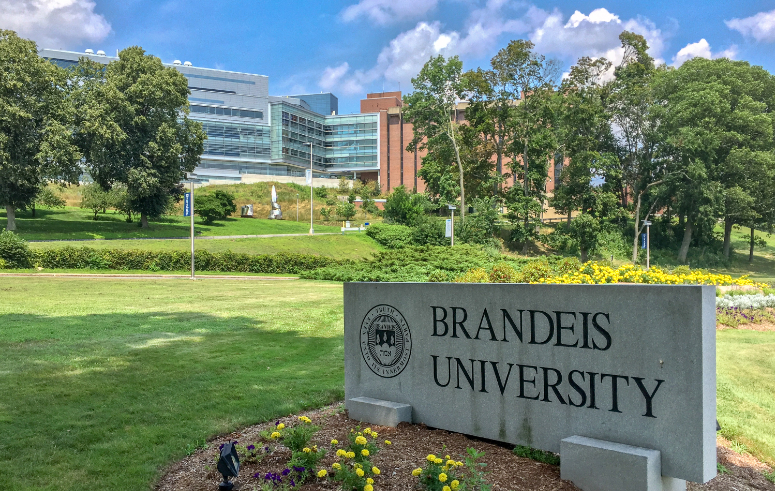
Tell Brandeis University to End Its Absurd Oppressive Language List

Want to have a wild picnic with your tribe? According to Brandeis University, three of the words in that sentence constitute “oppressive language” that should not be used. We could have used a trigger warning, but that isn’t allowed either according to Brandies because “The word ‘trigger’ has connections to guns for many people.” These are just a few examples from an absurd catalog of off-limits language labeled the “Oppressive Language List” on Brandeis’ website telling students what words and phrases to avoid lest they “perpetuate oppression.” Join NTC in calling on Brandeis to take down this bizarre list that does a severe disserve to the students coming to them for education! The list has five sections: violent language (“trigger warning,” “take a stab at,” “picnic”), identity-based language (“congressman,” “walk-in,” “crazy”), language that doesn’t say what we mean (“victim,” “abusive relationship”), culturally appropriative language (“tribe,” “spirit animal”), and person-first alternatives (“addict,” “homeless person”). The absurdity is self-evident. Can students not say “picnic table”? If “trigger warning” is out because of violent imagery, can a chemistry student not say that a certain process “triggers a reaction?” If Brandeis is concerned about gendered words or words with loose ties to slavery, why is it handing out Bachelors’ and Masters’ degrees? A footer on the Oppressive Language List website ominously declares, “This list will grow and change all the time,” and encourages students to “share additional suggestions” that can be added to the compilation of prohibited words. In other words: the rules will keep changing, the list of restricted words will only get larger, and the madness will never end. In a section describing its English major, Brandeis’ website says, “The study of English is an astonishingly rich and varied field. English spans history, from the Middle Ages to the present day. It spans geography, taking on different shapes in English-speaking cultures around the world.” This is exactly right. English has adopted words and phrases from many backgrounds, and many words have multiple meanings. Brandeis claims to teach English majors to “write skillfully and stylishly.” Students simply cannot do that if they must omit every word for which someone could potentially be offended. Brandeis students pay a cool $73,100 a year for their education. They deserve better than runaway political correctness that teaches them to be poor communicators who see oppression around every corner. Use the form on this page to send a message to Program Director Sarah Berg telling her to end this oppressively silly list! Update (06/29/21): Brandeis has removed the word “picnic” from their list.

Legacy NTC Campaigns

Victory! USD Law Stopped Attacking Prof. Tom Smith for Criticizing the Chinese Government

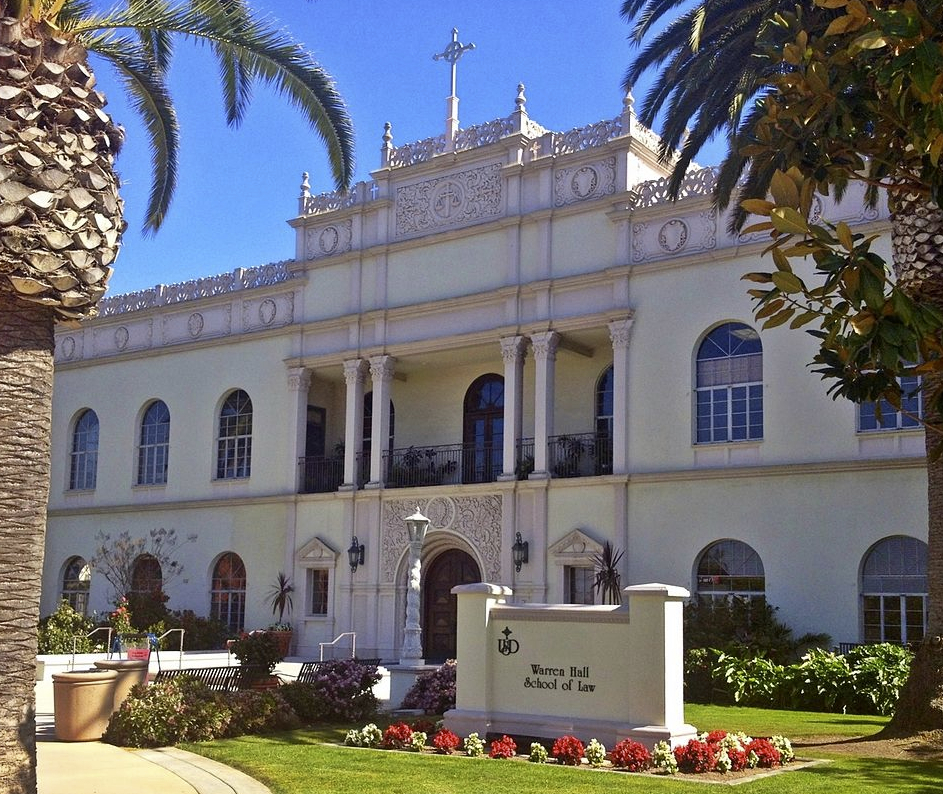
After nearly 700 of you sent emails, the University of San Diego (USD) Law School has formally dropped a disciplinary investigation of a professor after falsely accusing him of spreading anti-Asian sentiment on campus. On March 10, Professor Tom Smith published a post on his personal blog about China’s handling of COVID-19 that includes the sentence: “If you believe that the coronavirus did not escape from the lab in Wuhan, you have to at least consider that you are an idiot who is swallowing whole a lot of Chinese cock swaddle.” Smith was clearly referring to the Chinese Government, not people of Chinese descent. His statement may be crude and controversial, but not racist. Yet USD responded by sending out a statement decrying the blog post’s “bias” and “disparaging language,” lumping it in with “harassment… epithets, derogatory comments, or slurs based on race or national origin.” It then launched an investigation into his actions. Nearly two months later, USD Law dropped the investigation, and Provost Gail F. Baker released the following statement: As a threshold matter, we sought to determine whether the blog post at issue was protected by our policy on academic freedom. After a thorough legal review, it was determined that the expression was protected by that policy. This conclusion in no way amounts to an endorsement by the university of the opinions shared in the blog post. Academic freedom lies at the core of the mission of the University of San Diego. At the same time, we are committed to providing an educational environment that honors the dignity of every individual. Those two commitments can and must co-exist.  The New Tolerance Campaign is glad to see that USD Law ultimately came to the right decision and proud of the activists who helped make it happen. However, USD’s decision to attack Prof. Smith and label his comments racist was unacceptable in the first place, especially for an institution training future lawyers and judges. The NTC team will keep a close eye on USD moving forward to ensure they uphold their stated principles of academic freedom.

Past Campaigns

Tell the ACLU to Set the Record Straight on False Accusations that Ruined Lives at Smith College

The New York Times recently published a scathing critique of an alleged racism incident at Smith College that turned out to be nothing of the sort. The ACLU championed the false claim and has yet to retract its statements or apologize for its misleading campaign that seriously harmed an accused janitor and cafeteria worker. Join NTC in demanding that the ACLU apologize and set the record straight! In 2018, Smith student Oumou Kanoute claimed that white workers called school security on her while she was minding her own business and eating lunch on Smith College’s campus, where she was working over the summer. She claimed that it was a clear case of racial profiling, and the ACLU, Smith College, and many news outlets took her at her word. The ACLU created the “eating while black” campaign, holding the incident up as proof of everyday racism. Three months later, a law firm hired by Smith College found out what really happened that day. A summer camp rented space from Smith College and thus for the sake of child safety, some areas became off-limits to everyone else. A cafeteria worker told Kantoute that the area was off-limits, but didn’t press the issue. A janitor saw that there was an unauthorized person in the area and followed protocol by calling security. A security guard showed up and politely asked her to leave. Kantoute responded by posting the names and pictures of those who supposedly racially profiled her on social media, and the story blew up to national news, fanned by the ACLU. The janitor was placed on leave and the cafeteria worker been subjected to rampant harassment, including people leaving notes at her home calling her a racist. She’s struggled to find a new job because she’s become locally infamous. When the truth came out, the ACLU didn’t back down. According to the Times: Rahsaan Hall, racial justice director for the A.C.L.U. of Massachusetts and Ms. Kanoute’s lawyer, cautioned against drawing too much from the investigative report, as subconscious bias is difficult to prove. Nor was he particularly sympathetic to the accused workers. “It’s troubling that people are more offended by being called racist than by the actual racism in our society,” he said. “Allegations of being racist, even getting direct mailers in their mailbox, is not on par with the consequences of actual racism.” The ACLU makes a lot of noise about civil liberties and equality, but this incident shows they put a preferred narrative over anything resembling equality. The organization should have gotten the facts before spreading Katoute’s narrative, but now that the truth has been revealed, they have a responsibility to reverse the damage as much as possible. Using the form on this page, you can send an email to the ACLU demanding that they retract their previous statements, set the record straight, and apologize to the innocent people whose lives they helped ruin.   Campaign Update 3/10/21: The ACLU has removed the page on their website that uncritically repeats Kanoute’s false narrative, but they have not made a statement or removed other pages on their website that categorize the incident as racial profiling.

Scroll to Top